

In Kathmandu on Saturday, a truck transporting Balendra Shah, a candidate for the Nepali prime ministership, was overwhelmed by enthusiastic supporters, causing it to halt as the former rapper, clad in sunglasses and a stylish black suit, danced atop the vehicle.
With Nepalis preparing to vote on Thursday in the first election following a Gen Z uprising that ousted the previous government last September, Shah’s campaign as a former musician and current mayor of Kathmandu has energized the electorate. Many young voters are eager for him to unseat established politicians from Nepal’s old political guard.
“He represents a modern perspective and connects with our generation,” remarked 20-year-old civil engineering student Sirjana Gaire. “He gets how we want the world to view Nepal.”
The primary political contest in this election, which may alter the future of Nepal’s politics, is unfolding in the Jhapa district. Here, 35-year-old Shah, often referred to as Balen, is competing against the prime minister ousted by Gen Z protestors last fall.
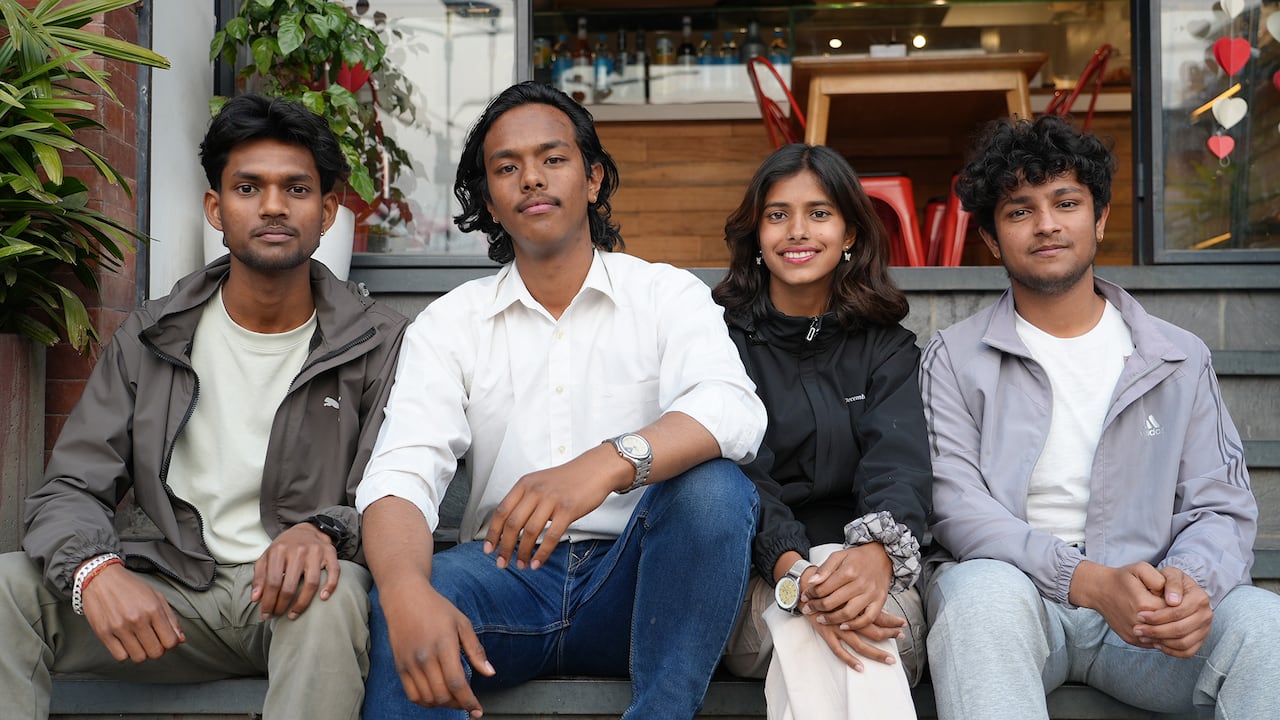
Balen Shah resonates with their generation, according to these Nepali Gen Z students, who will cast their votes for the first time in Thursday’s election. From left: Samir Singh, Saphal Shrestha, Sirjana Gaire, and Shittal Neupane. (Salimah Shivji/CBC)
KP Sharma Oli, leader of the Communist Party of Nepal (Unified Marxist-Leninist), has served as Nepal’s prime minister four times and is running again, even though the 74-year-old was compelled to resign six months ago due to widespread public anger regarding government corruption, nepotism, and economic inequality.
The protests began over a ban on social media but quickly evolved into a broader expression of deep-rooted dissatisfaction with political corruption and instability in Nepal, particularly after security forces responded to demonstrators with live ammunition and tear gas. Over 70 individuals lost their lives, and hundreds sustained injuries during the two-day uprising, which left significant landmarks, including the parliament building and Supreme Court, damaged and charred.
Oli’s current campaign has been characterized by smaller meetings with loyal supporters in his district.
“The Gen Z protesters won’t be the ones to develop our country,” stated 72-year-old Bishnu Prasad Sedai. “We must ensure KP Oli’s victory. He is the only one we trust, not the other candidate,” he said, referring to Balen.
In Kathmandu, however, such sentiments are becoming increasingly rare.
Shittal Neupane, a classmate of Gaire’s, shared with CBC News that Shah’s transformation from a rapper critiquing politicians to potentially becoming one himself is “remarkable.” Neupane expressed that Thursday’s election must yield change, or he and his peers will “be left speechless.”
“If there is no change this time, I won’t be disappointed in any political party or leader — I will be disappointed in the citizens of my own country,” remarked 19-year-old engineering student Samir Singh.
“Everyone in Nepal shares our frustration.”
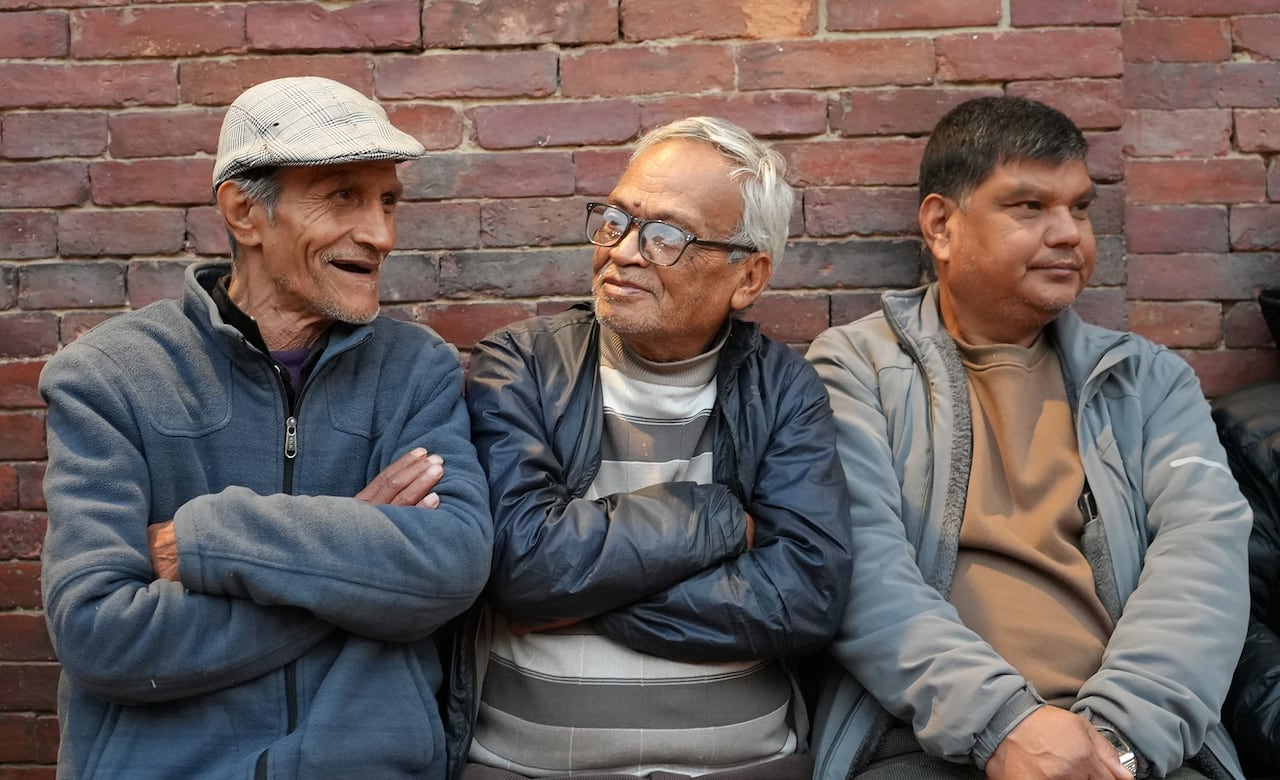
DK Shakya, center, and his friends are dissatisfied with the traditional political leaders in Nepal and plan to vote for Gen Z candidate Balen Shah in Thursday’s election. (Salimah Shivji/CBC)
DK Shakya, 72, noted that the enthusiasm for Shah is not limited to the younger generation, as he spoke with friends in Lalitpur’s Patan Durbar Square before heading to the polls.
“We’ve seen what the old parties have delivered — nothing,” Shakya stated. “That’s why we will vote for the bell this time,” he added, alluding to the symbol used by Balen’s party on the ballot.
Young voters seek significant change
With 46 percent of Nepal’s population under the age of 24, this week’s election will reveal whether their discontent can be transformed into meaningful political change or if the traditional parties will continue to dominate the country’s delicate democracy.
Nepal’s complex electoral system often results in unstable coalition governments. In the last 35 years, the country has seen 31 different prime ministers.
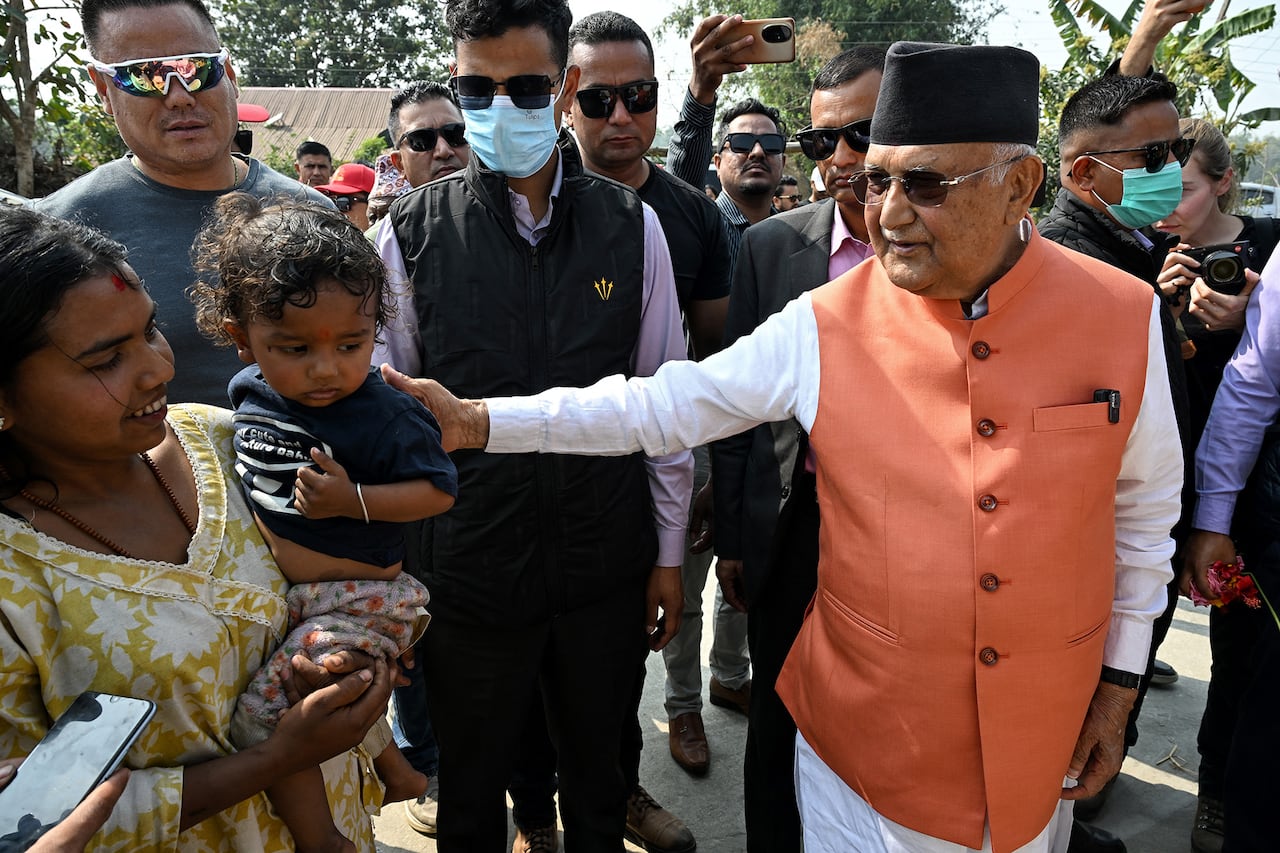
Khadga Prasad Sharma Oli, front right, the former prime minister of Nepal and leader of the Communist Party of Nepal-Unified Marxist Leninist (CPN-UML), greets supporters during a rally on the last day of campaigning in Gauradaha, Jhapa district, on March 2. (Prakash Mathema/Getty Images)
A struggling economy coupled with rampant political corruption has compelled hundreds of thousands of young Nepalis to seek work abroad, as the youth unemployment rate exceeds 20 percent.
“There is a Balen wave,” commented Lok Raj Baral, a veteran political scientist at Tribhuvan University in Kathmandu and a former ambassador to India.
“But how far will this wave carry in the political arena?” Baral questioned, noting that the party gaining the highest number of votes on Thursday is unlikely to achieve a solid majority, which would lead to another coalition government and further political maneuvering.
Shah has mostly avoided media interviews, opting to communicate with his supporters through social media. He recently shared a message on Facebook that read, “F–k America, F–k India, F–k China,” which has led some analysts to doubt his readiness for a prominent political position.
Significant focus has been placed on the young candidate and the Rastriya Swatantra Party he recently joined, as they present strong competition to the ruling powers. However, several other established political parties are only nominating a few Gen Z candidates.
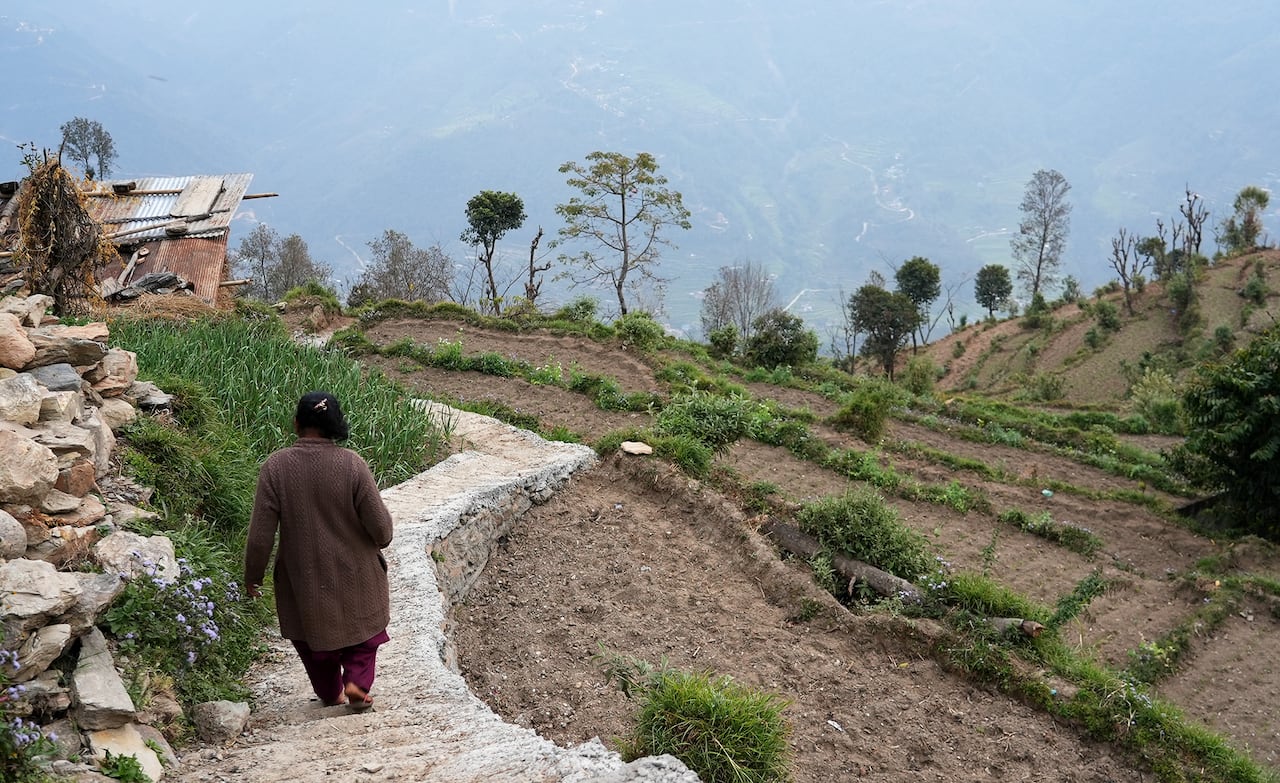
Numerous Nepalis returned to their villages to cast their votes in Thursday’s election. (Salimah Shivji/CBC)
Up until recently, all three of the main political parties were led by leaders in their seventies who had exchanged positions as prime minister. This is no longer the case for the center-left Nepali Congress Party, which elected Gagan Thapa, 49, as its president just weeks before Thursday’s election following an internal dispute.
‘Shot like terrorists’
To address security concerns ahead of the election, Nepal’s interim government has deployed approximately 335,000 security personnel. Final results will take several days to be tallied.
In the days leading up to the election, many Nepalis have traveled back to their hometowns to vote, including 25-year-old Madan Karki, who journeyed from Kathmandu to Padiguan in Sindhupalchok district.
Karki was shot in the arm by police during the protests, resulting in permanent nerve damage to his left hand.
“When I was hit, it felt as if my heart stopped beating,” he recounted to CBC News, describing how his friends carried him, bleeding heavily, to an ambulance. “The sky was spinning, and I felt like death was closing in on me.”
“We were protesting for our country, yet we were treated like terrorists,” Karki stated.
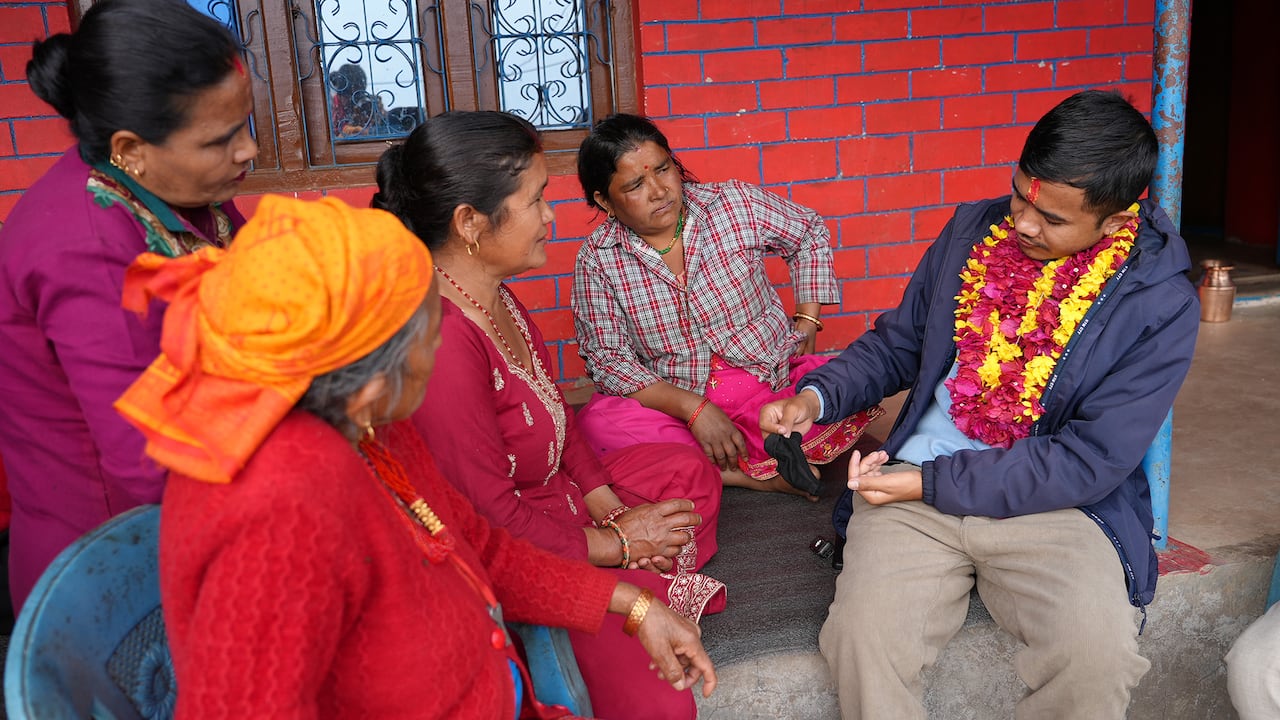
Madan Karki, right, reveals his injured hand to his mother, who is in red, along with other family members. (Salimah Shivji/CBC)
Karki expressed his anger that the former prime minister, who denied giving orders to security forces to open fire on protesters, is running for office again.
“Oli doesn’t even possess the moral authority to participate in this election,” said Karki, who is trained as a videographer.
Due to his injury, he can no longer handle a camera and has lost work as a result, now limited to editing tasks. His hand often burns with pain, and he wears a glove to keep it warm due to poor circulation.
His parents have endured a tumultuous few months, worrying about their son’s slow recovery.
Karki’s mother, who felt as if her life fell apart upon learning her son had been shot, constantly thinks of all the mothers who lost their children during the protests.
“I demand that those responsible for the violence be held accountable after the elections,” insisted 49-year-old Juna Karki.
Her son remains “not particularly optimistic” about the prospect of change in Nepal, even after Thursday’s voting — especially since many Nepalis tend to vote for the same party that their families have historically supported.
“But let’s remain hopeful. It may take some time.”