

With negotiations intensifying between Washington, Ukraine, and Russia, U.S. President Donald Trump remains hopeful about nearing a peace agreement, despite lingering disagreements between Kyiv and Moscow on crucial issues.
The control over disputed regions in Eastern Ukraine and the provision of security guarantees are key points where consensus has not been reached.
For Kyiv, ensuring strong deterrents against potential Russian aggression and securing military support from allies in the event of an attack are essential components of any peace deal.
Ukraine’s Security Demands
Ukraine is seeking binding security assurances, not just verbal commitments from its allies.
Following the Soviet Union’s dissolution in 1994, Ukraine relinquished Moscow’s nuclear arsenal in exchange for security guarantees from the U.S., the United Kingdom, France, China, and Russia under the Budapest Memorandum. However, this non-binding agreement is viewed as a failure by many Ukrainians, especially after Russia’s annexation of Crimea in 2014 and subsequent military actions in Ukraine.
While Ukraine aims to join NATO, the lack of consensus within the alliance has prompted Kyiv to seek U.S.-backed security guarantees instead.
Current Discussions
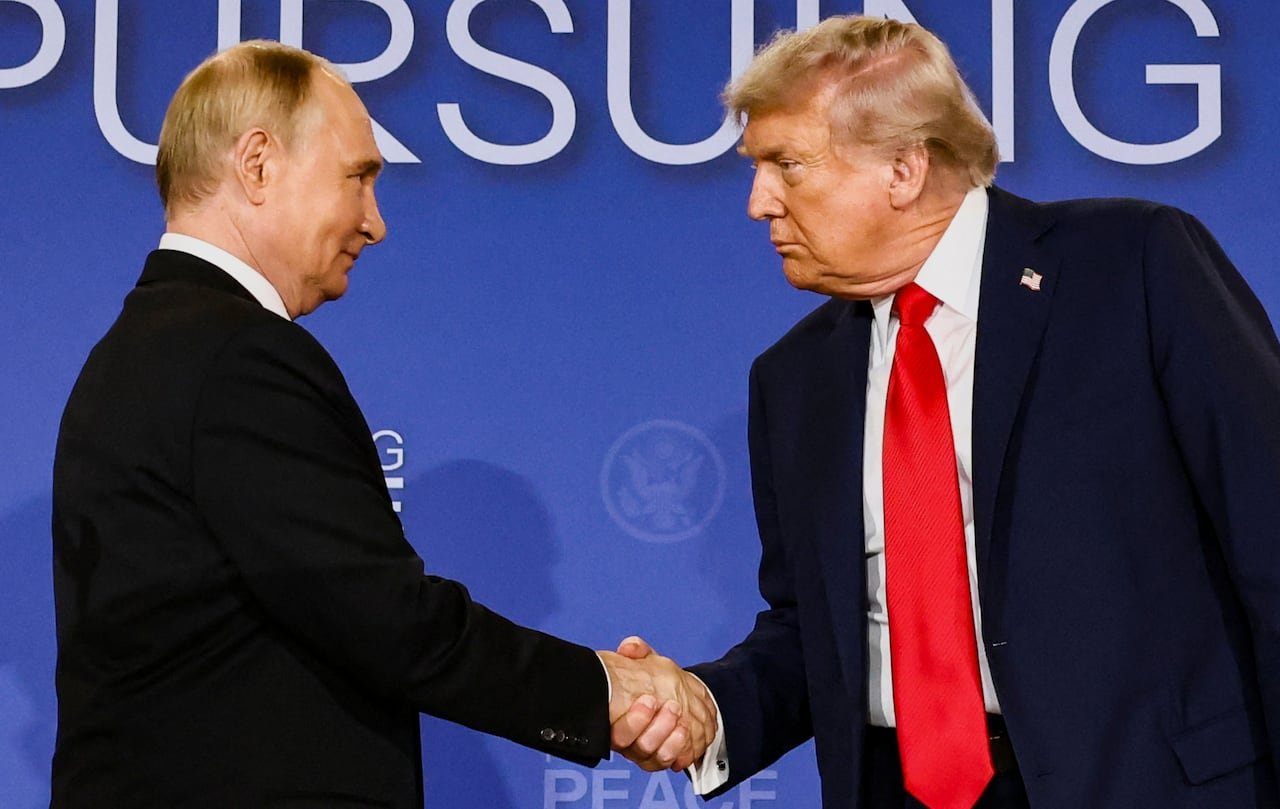
One proposal being considered is providing Ukraine with security assurances inspired by NATO’s Article 5, which mandates collective defense among alliance members in response to an attack on any member state. This concept was initially suggested by Italy and later discussed by Trump with Putin during their meeting in Alaska.
Although Russia has not publicly confirmed this, a leaked 28-point peace plan supported by Moscow and Washington mentioned the provision of “reliable” security guarantees involving U.S. participation.
Furthermore, a European counterproposal outlined the potential inclusion of a U.S. security guarantee similar to Article 5.

Fabrice Pothier, CEO of Rasmussen Global and a former NATO policy planning director, explains why Russia shouldn’t dictate the terms of security guarantees for Ukraine.
Clarifying ‘Mirrors’
The exact implications of the term ‘mirrors’ are still unclear, as all points are subject to ongoing debates, contingent upon the commitments of Washington, Kyiv, and Moscow.
Oleg Ignatov, a senior Russia analyst with the International Crisis Group, suggests that the U.S. could enter into a security pact with Ukraine akin to its agreements with South Korea and Japan,