

Chris Jones provides insights from Italy ahead of the upcoming Milano Cortina Olympics.
Approaching Cortina, remnants of the 1956 Winter Olympics linger. The ski jump, now a soccer field, stands as a silent witness to past sporting glory. The nostalgia of simpler times envelopes the site, evoking a sense of warmth and reminiscence.
Back in 1956, Cortina proudly hosted the entire Winter Games, with a modest 32 countries in attendance. Figure skating graced the outdoors for the final time, set against the picturesque backdrop of the mountains. While television was gaining traction, the Olympics remained primarily an in-person spectacle.
The 2026 Winter Olympics, jointly hosted by Cortina, Milan, and various venues across northern Italy, are proving to be a complex endeavor, tailored for a global audience and television viewership.
In Milan’s bustling Piazza del Duomo, a countdown clock ticks away the seconds to the grand event. Locals seem more engaged in racing against time than eagerly anticipating its commencement. Concerns have been rife over construction delays at the Milano Santagiulia hockey arena, overshadowing discussions about the Olympics.
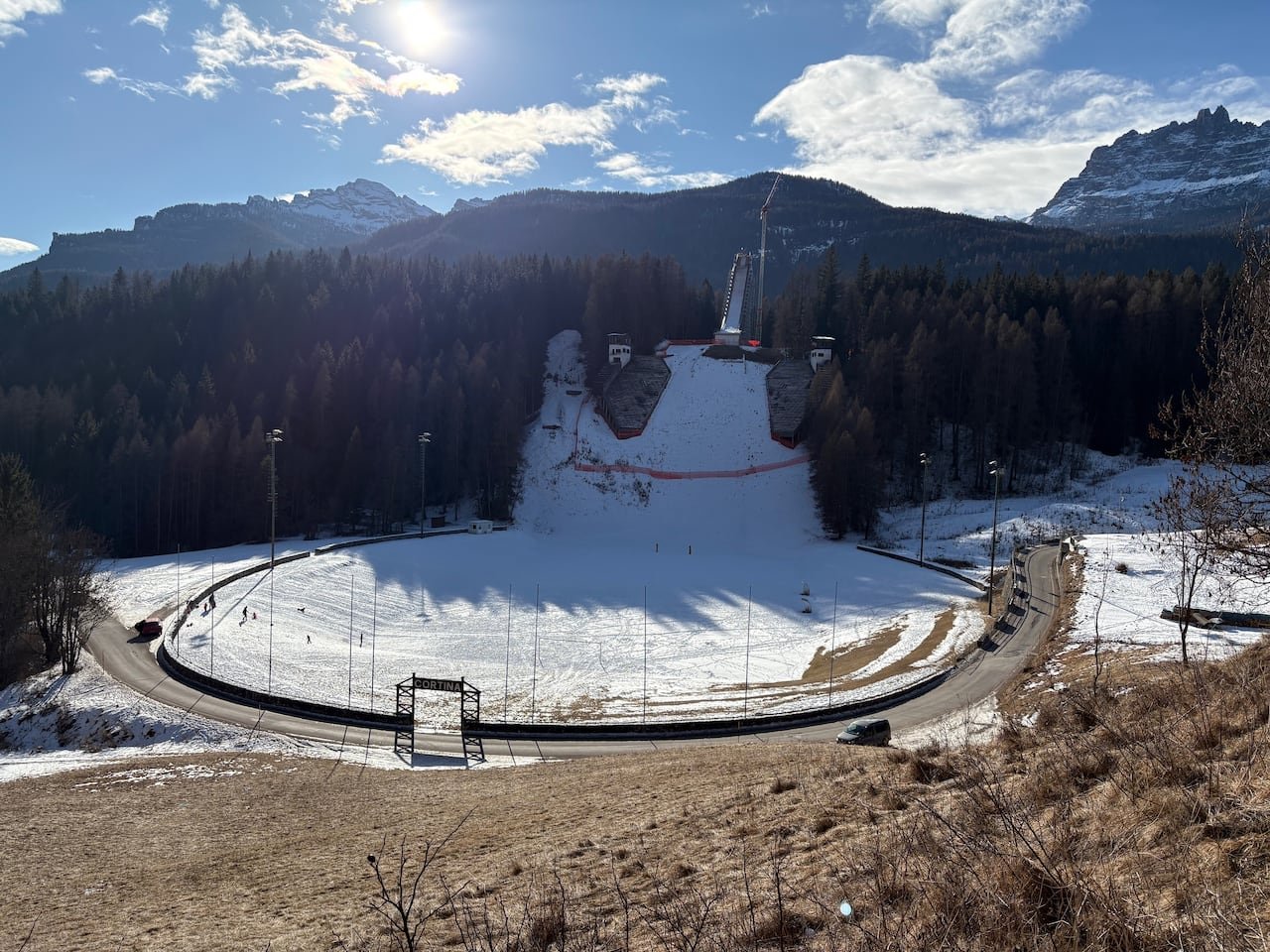
In picturesque Cortina, the venue for curling, sliding sports, and women’s Alpine events, a similar frenzy of last-minute preparations unfolds. The sounds of construction reverberate through the woods, with concerns lingering about sufficient snow cover on the renowned slopes.
Amidst the cobblestone streets of Cortina, a sense of joy and readiness permeates the atmosphere, contrasting with the more apprehensive mood in Milan. Decorative banners adorn the town, paying homage to 1956 while celebrating the upcoming 2026 games.
While optimism may seem distant in Milan, in Cortina, a positive outlook requires just a slight squint.
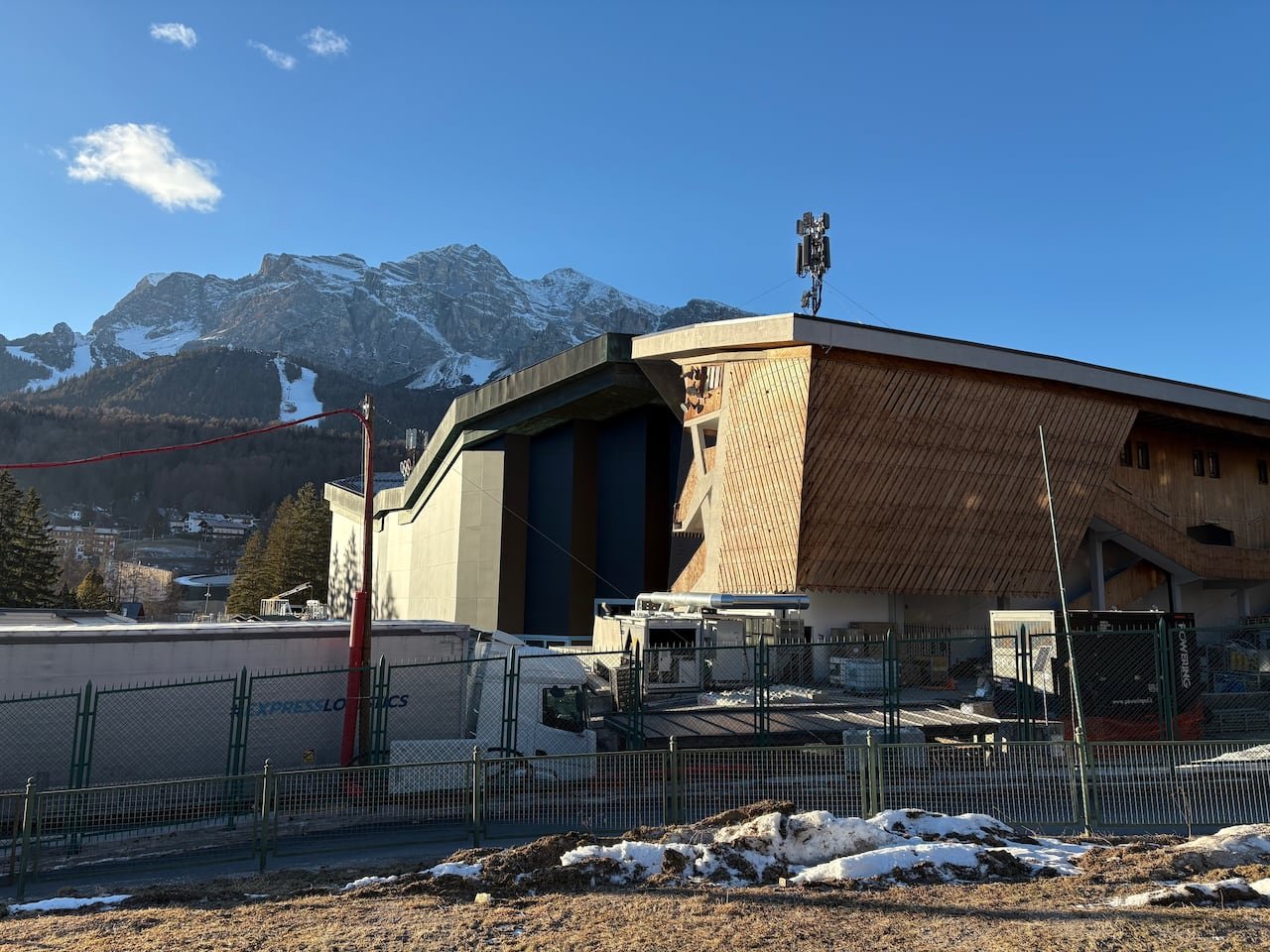
The Stadio Olimpico del Ghiacco, the curling venue, is a revamped 1956 hockey rink. Despite ongoing construction clutter, the modernized building, crafted from copper and wood, gleams under the sun.
The bobsled track at the sliding center mirrors its 1956 predecessor. While the spectator facilities are still incomplete, recent World Cup events have successfully taken place on the track.
Due to its historical significance, the track offers a technical challenge rather than a thrilling ride. What once instilled fear in bobsledders now demands strategic finesse from modern sliders, favoring precision over raw speed.
- <a class="cardWrapper-u5T0r cardWrapper-_487P noPaddingCardWrapper" data-feature-instance="similar-link" data-feature-name="link" data-contentid="9.7032763" aria-hidden="false" data-cy="type-link