

The Assembly of First Nations (AFN) is urging the federal government to immediately retract a proposed bill that aims to acknowledge the self-governance rights of the Red River Métis.
Cindy Woodhouse Nepinak, the National Chief of AFN, stated that Bill C-21, known as the Red River Métis Self-Government Recognition and Implementation Treaty Act, poses a risk of establishing a “hierarchy of rights” by granting self-governing powers to the Red River Métis “to the detriment of First Nations treaty rights.”
In an interview with CBC Indigenous, Woodhouse Nepinak expressed that Canada is attempting to foster a split between First Nations and Métis, especially regarding land matters.
“I believe it is essential for First Nations and Métis to engage in dialogue together, free from interference from Canada or any external parties,” she commented.
She also noted that the treaty agreement was established without consulting First Nations, “despite significant consequences for First Nations lands and territories in Manitoba and beyond.”
In 2021, a Self-Government Recognition and Implementation Agreement was signed, which acknowledged the Manitoba Métis Federation (MMF) as the governing body for the Red River Métis.
Should Bill C-21 be passed, it would supersede the recognition agreement with the self-government treaty, marking the first such agreement between a Métis government and Canada.
The bill was presented in Parliament on February 12 and commenced its second reading on Wednesday.
According to Woodhouse Nepinak, the “unclear territorial boundaries of the Red River Métis outlined in the bill could lead to broad Métis jurisdiction over regions that may conflict with the existing rights and authority of First Nations.”
She further asserted to CBC Indigenous that the federal government must prioritize resolving current land disputes with First Nations, who are “foundational partners in this country.”
“This land is ours traditionally,” she emphasized.
“It is our land, and I cannot define where Métis land is. I have no idea.”
‘No hierarchy of rights’
MMF President David Chartrand, present during the reading in the House, expressed that Woodhouse Nepinak’s remarks did not catch him off guard.
“We have fully supported all expansions of treaty land entitlements, so for her to initiate this conflict suggesting that all First Nations oppose this is quite unrealistic,” Chartrand stated.
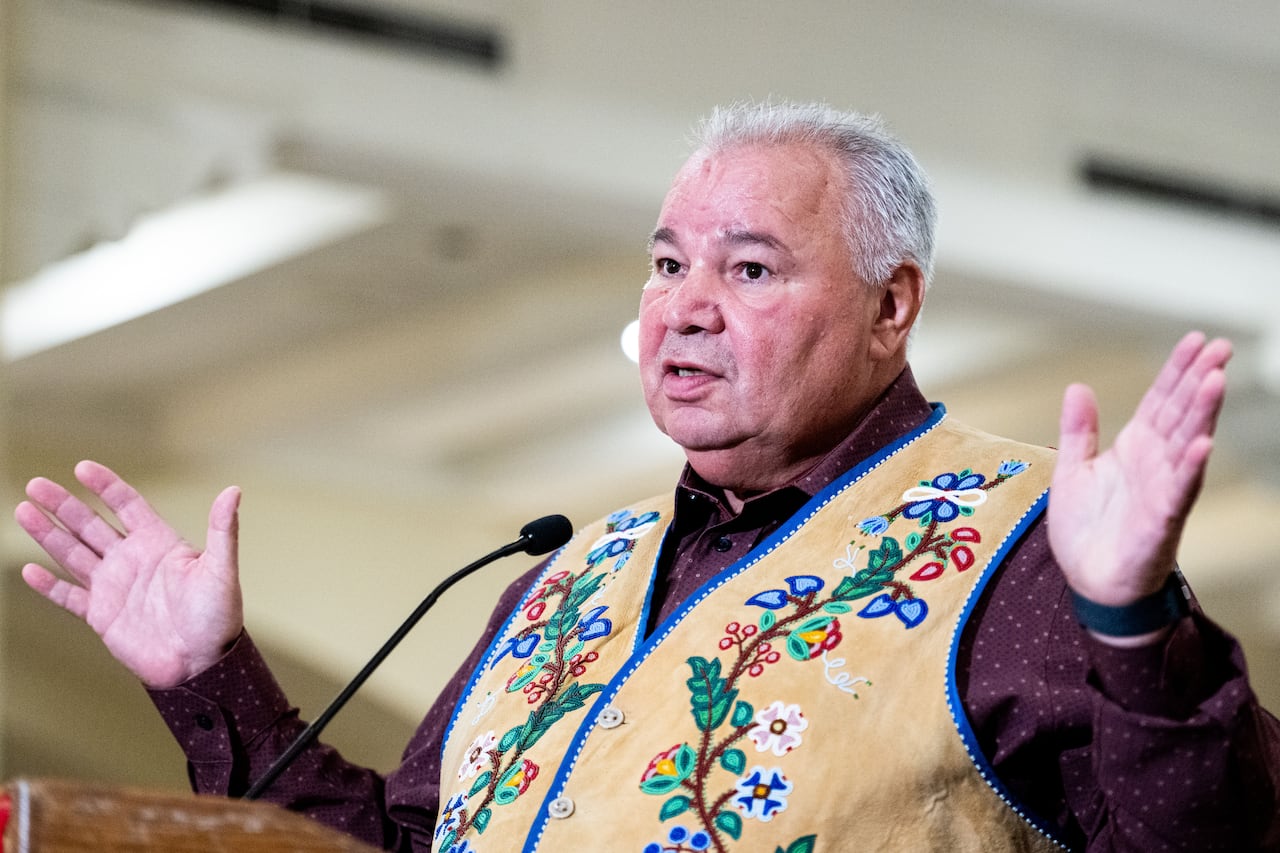
President of the Manitoba Métis Federation, David Chartrand, asserts that no ‘hierarchy of rights’ exists between First Nations and Métis in Canada. (Spencer Colby/The Canadian Press)
“There is no hierarchy of rights. The rights of First Nations do not hold a higher status than those of the Métis.”
-
‘The foundation of the future’: MMF signs 1st modern Métis treaty with federal government
-
About 4,000 Manitoba Métis Federation citizens vote yes on modern treaty with the Crown
Chartrand extended an invitation to Woodhouse Nepinak to debate him regarding the bill “whenever and wherever in this country,” and encouraged others opposing the bill to express their concerns during the House Committee discussions.
“I welcome consultation. People deserve as much information as possible, and that’s the purpose of having a committee,” he remarked.
“The committee will convene, and you will have an opportunity to share your thoughts, pose any questions, and seek further clarification or propose amendments.”
The Métis Nation-Saskatchewan, which is developing its own self-governing agreement with the federal government, released a statement on Wednesday expressing congratulations to the Manitoba Métis Federation on the progress of Bill C-21’s second reading.
“Métis peoples across all jurisdictions possess the right to self-governance and self-determination,” stated MN-S President Glen McCallum.
‘This treaty does not exist in a vacuum’
During the House of Commons session on Wednesday, Conservative MP Billy Morin highlighted the lack of clarity in the treaty’s definitions and scope, particularly regarding the provisions for “future supplementary self-government arrangements.”
“To be completely honest, I have received feedback from First Nations in the past 48 hours expressing significant concerns,” Morin told the House of Commons.
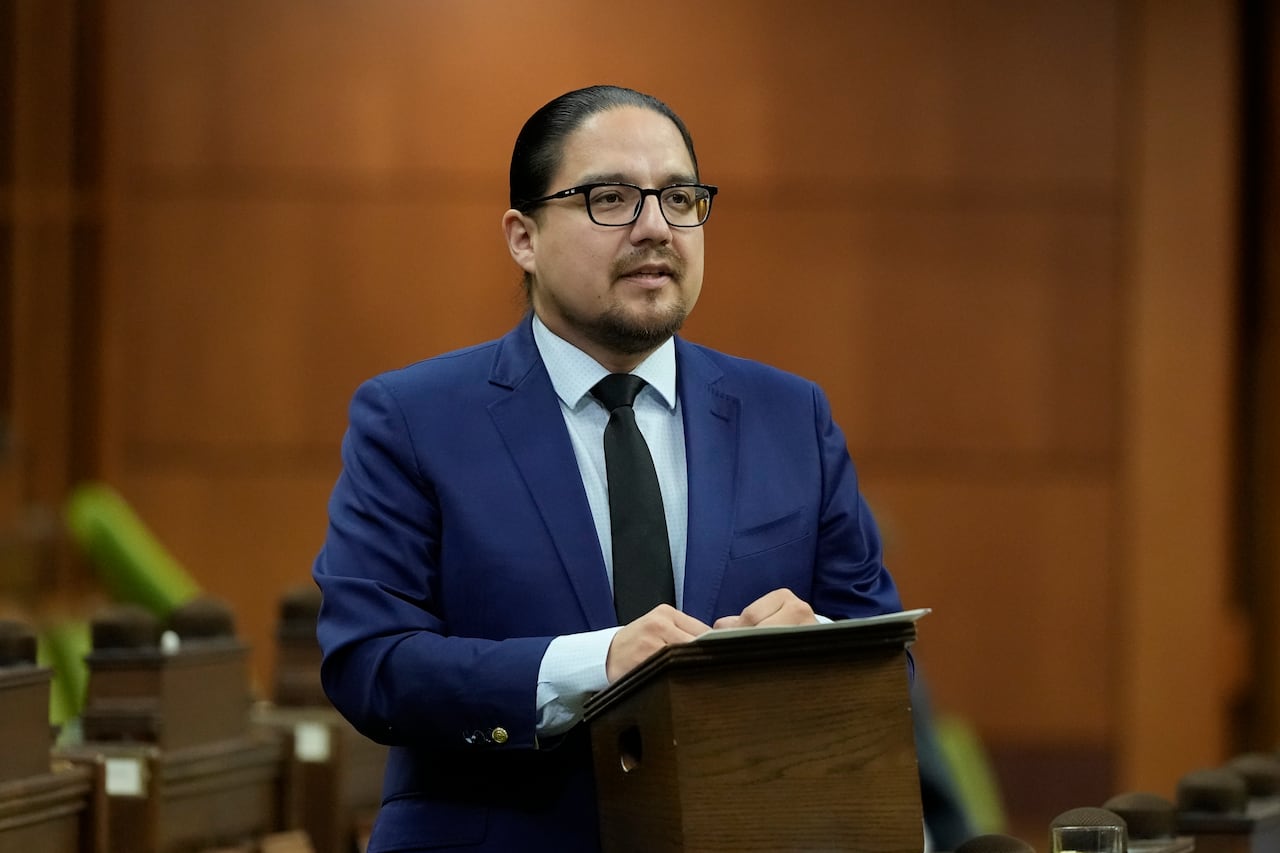
Edmonton Northwest MP Billy Morin expresses concerns regarding the ambiguity in the self-government treaty for the Red River Métis. (Adrian Wyld/The Canadian Press)
Conservative MP David McKenzie remarked that “there has been a clear and undeniable lack of consultation. This treaty does not exist in isolation. Its effects extend well beyond Manitoba.”
A spokesperson for Crown-Indigenous Relations and Northern Affairs Canada, Anispiragas Piragasanathar, indicated in a statement to CBC Indigenous that the government conducted consultations with potentially affected groups from August 2023 to October 2024.
Piragasanathar mentioned that Canada reached out to “all 63 First Nations in Manitoba to inform them about the draft treaty and to provide an opportunity for involvement in the Crown’s consultation and engagement process.”
“All 63 First Nations had the chance to meet directly with officials and/or submit written feedback to communicate concerns regarding the draft treaty.”
Piragasanathar stated that further discussions on Bill C-21 have yet to be scheduled and will be determined at a later date.