


In the vast African savannah, elephants are shown to have a lasting impact on the ecosystem even after they have passed away.
A recent research study conducted by an international team of experts in South Africa’s Kruger National Park has shed light on how elephants, known as “ecosystem engineers,” continue to influence their surroundings postmortem.
Courtney Reed, the lead author of the study published in the Proceedings of the National Academy of Sciences of the United States of America, explained that the nutrients present in elephant carcasses can have a prolonged impact on the ecosystem, even lasting beyond seven years.
By analyzing soil composition and biodiversity around elephant carcasses, researchers discovered that the decomposition process releases a significant amount of nutrients into the soil, fostering microbial activity and promoting the growth of nutrient-rich plants. This, in turn, attracts herbivores to the area long after the elephant carcass has decomposed.
Although initially causing a decline in vegetation due to the excess nutrients, the ecosystem eventually recovers as the soil regains balance and supports the growth of nitrogen-rich plants essential for herbivores.
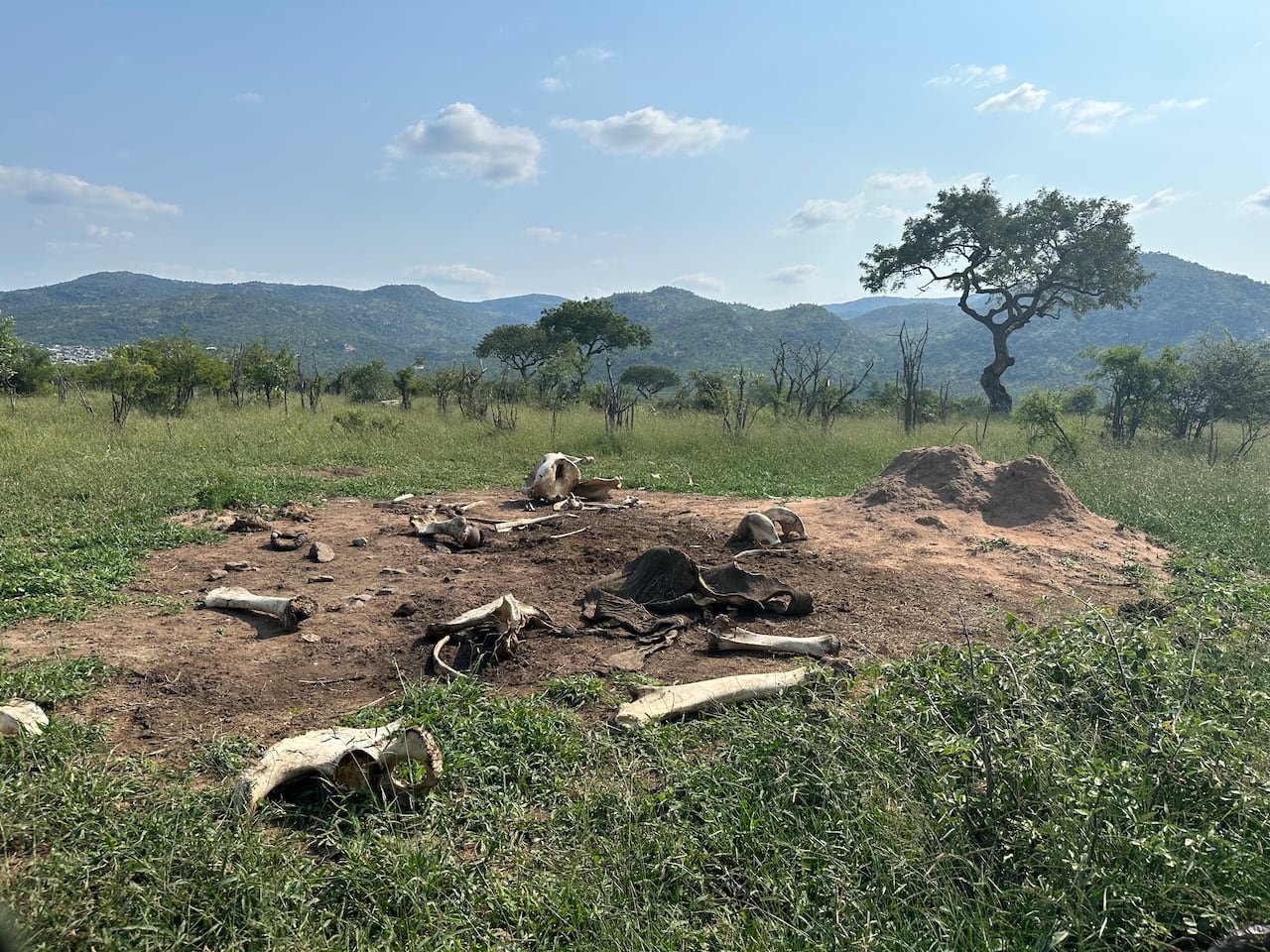
The study found that the high concentration of nutrients in elephant carcasses initially kills off vegetation around the place of decomposition, leaving large bare patches or ‘cold spots’ in biodiversity. (Submitted by Courtney Reed)
Over time, the ecosystem undergoes a transformation, attracting herbivores like zebra, buffalo, and rhinos, drawn to the nitrogen-rich vegetation. This, in turn, sustains a cycle of herbivore activity around the decomposed carcass site.
Furthermore, researchers noted that grazing animals and scavengers continue to frequent these sites, further enriching the soil with their waste, creating a positive feedback loop that enhances the surrounding environment long after the elephant’s demise.