

In the spring of 2023, Acadia University student Sujit Acharya faced the daunting reality of owing thousands in tuition with only $300 to $400 available to him.
Due to his financial difficulties, Acharya’s meals often came from a monthly food bank pickup, prompting him to take a leap of faith despite his uncertainties.
The 23-year-old business administration student from Nepal invested his limited funds into purchasing food steamers and ingredients to prepare momos, a traditional Nepalese dumpling, which he then sold at a mural festival in Kentville, N.S.
“If I hadn’t made that choice, I would have regretted it, so I just went for it,” Acharya stated.
His momos sold out within hours, bringing in $1,500, but the experience offered him something even more valuable.
“It was an awakening moment, realizing that I should start believing in myself,” he reflected.

A plate of momos, served with chutney, is shown. (Galen McRae/CBC)
Starting from humble beginnings, with some months’ rent covered by connections from his church, Acharya’s venture has blossomed into MomoNepal, which now offers vegetarian dumplings and chutney in four retail locations and at farmers’ markets.
He achieved this while managing mental health challenges, maintaining his full-time academic schedule, and adhering to regulations that restrict the working hours of international students, regardless of whether they are self-employed or employed by others.
Acharya, who is set to graduate next month, is among the eight recipients of this year’s Frank H. Sobey scholarship, a prestigious $50,000 award given to select business students at universities in Atlantic Canada.
-
Inspired by great-grandfather’s near death, scholarship winner hopes to make life safer for fishermen
-
Orphaned at 14, this Acadia student just landed a prestigious $45K scholarship
-
She quit university due to an alcohol problem. Now sober, she landed a $35K scholarship
He intends to utilize the scholarship funds to acquire a kitchen in Halifax, where his company can produce its offerings and expand.
Acharya mentioned that he did not engage in cooking during his childhood. Being the youngest in his family and surrounded by many relatives, he never had the need or desire to cook.
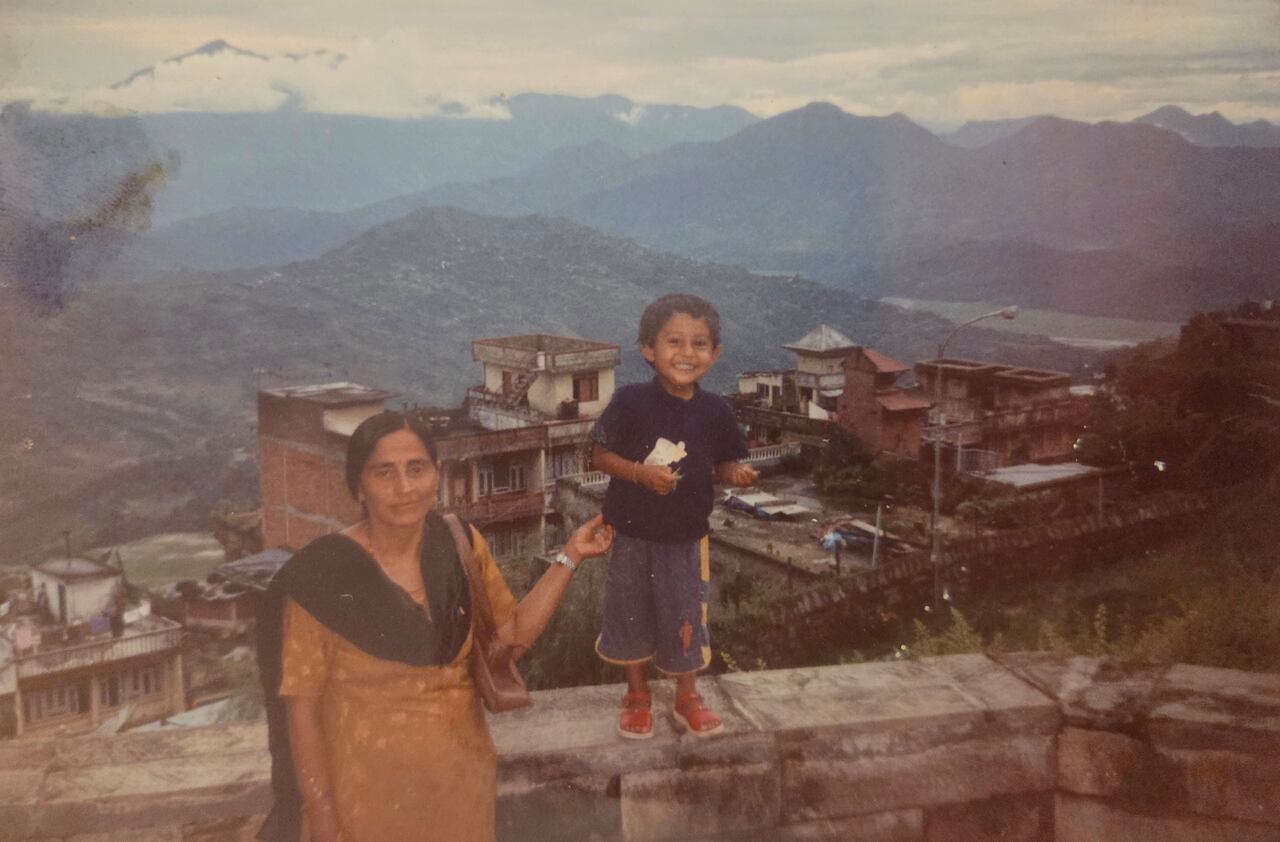
Acharya is shown in a photo from his childhood in Nepal with his mom. (Submitted by Sujit Acharya)
He chose to sell momos because he identified a gap in the market, believing that they would appeal to the South Asian community in Nova Scotia.
“I realized I was entirely incorrect after running the business—my customer base is not South Asian,” he explained.
Through YouTube tutorials, he improved his recipes. Following the mural festival, he showcased his products a few months later at a Kentville multicultural festival, where he again sold out. However, he encountered a challenge at this particular event.
“I was unsure how to return home,” he admitted. “I didn’t know if I could transport all my supplies on the bus.”
Fortunately, a kind volunteer offered him a ride home.
Subsequently, Acharya began selling his momos on a trial basis at the Wolfville Farmers’ Market.

Acharya is shown with the head chef of MomoNepal in a commercial kitchen as they prepare product. (Clothesline Media)
“He’s very eager to learn, constantly asking questions, listening, and absorbing information to build on that and engage with others,” noted Kelly Marie Radcliffe, the market’s executive director. “He’s not hesitant to put himself out there.”
In her 26 years of experience at the market, she remarked that while other Acadia students have attempted to start businesses, theirs were significantly less structured.
“This is likely the first instance we have had a student who has created a robust business and subsequently expanded beyond our market to sell at others and build a team,” stated Radcliffe.
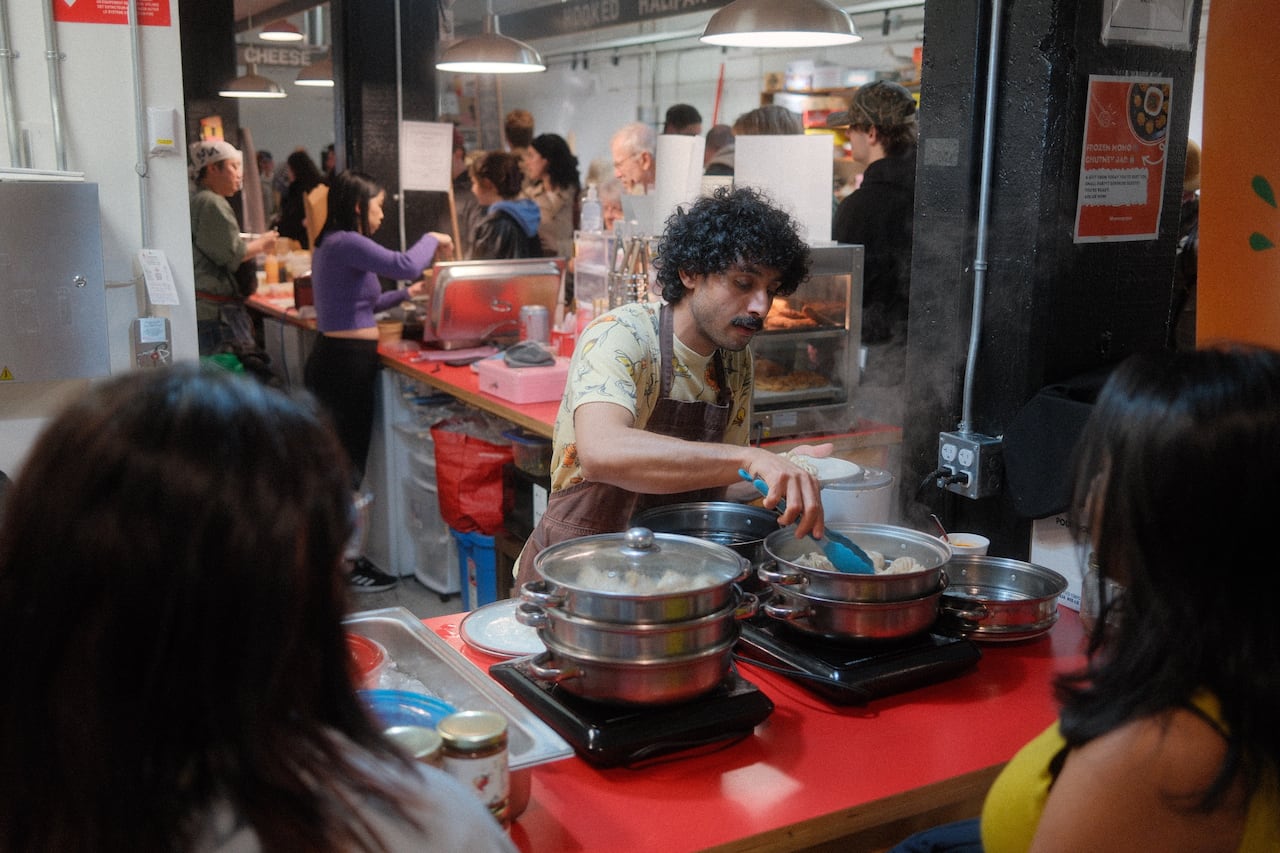
Acharya is shown at the Halifax Brewery Market on Saturday, April 25, 2026. (Galen McRae/CBC)
Acharya mentioned that his business employs one full-time head chef and several part-time workers.
He acknowledged that he found it challenging to secure a job early in his academic journey due to a lack of experience (even having been dismissed from a position), leading him to empathize with other students and prioritize their employment.
His personal experiences with food insecurity motivate him to incorporate a charitable aspect into his business and give back to the community.
A transformative opportunity, says professor
Ryan MacNeil, an entrepreneurship professor at Acadia who has taught Acharya in several courses, remarked that the Sobey scholarship will be a transformative experience for him.
“International students in Canada do not have access to entrepreneurial funding in the same way that permanent residents or Canadian citizens do,” MacNeil stated.
“There are numerous support programs available for young entrepreneurs in Canada. However, Sujit is ineligible for most of them due to his status as an international student.”
Working regulations
During the academic year, students are permitted to work off-campus for a maximum of 24 hours a week, or without restriction during scheduled breaks like summer and winter holidays, according to federal guidelines.
“We’ve had many discussions about this. ‘Ryan, my work hours are limited,'” MacNeil recalled.
Acharya plans to apply for a work permit followed by permanent residency. He has recently relocated to Halifax and is actively searching for a kitchen to purchase. Although a recent opportunity fell through, potentially due to his youth, he is determined to find another option and is reaching out to everyone he knows (including this reporter) for leads.
Yet, Acharya is accustomed to overcoming challenges and remains undeterred by this latest setback.
“I believe failure can happen at any moment,” Acharya shared. “Tomorrow is not guaranteed, and I keep the notion of inevitable death close to me, which helps me take action in life.”
MORE TOP STORIES