

Quebecor has put forth a $31 billion offer to acquire Telus.
The telecom firm based in Montreal announced on Monday via a press release that it had presented a non-binding proposal to Telus in June, which would serve as a foundation for further discussions. Currently, Telus is evaluating an improved offer from Quebecor submitted earlier this month, according to the statement.
Quebecor claims that the merger would unite complementary networks, spectrum, and operational strengths, enhancing investment capabilities and competitive positioning.
The suggested agreement would provide Telus shareholders with $6.35 in cash and 0.17 shares of Quebecor for each share of Telus they hold, reflecting an approximate 60 percent premium, as stated by the company.
As Canada’s fourth-largest telecom entity, Quebecor has experienced a significant increase in value in recent years following its acquisition of Freedom Mobile in 2023 through its subsidiary Videotron, leveraging its competitors’ networks to deliver mobile services to consumers. With a market capitalization of $14.77 billion for Quebecor and $21.72 billion for Telus, the potential acquisition would position Quebecor as larger than both Rogers and Bell in this regard.
Quebecor contends that the acquisition of Telus would yield a more robust company capable of better serving customers through expedited 5G rollout, improved rural connectivity, and increased affordability.
“This proposal will establish a formidable national competitor, equipped to compete fairly with other major providers and to challenge foreign companies, ultimately benefiting Canadians,” Quebecor stated in the release.
The company acknowledged that any agreement would need the approval of the Competition Bureau, along with regulatory bodies such as the Canadian Radio-television and Telecommunications Commission (CRTC) and Innovation, Science and Economic Development Canada.
The federal government has implemented measures aimed at boosting competition in the telecom industry, including regulations mandating that large internet providers grant access to their networks for competitors and emphasizing affordable cellular plans, as highlighted in its recent telecom competition roadmap.
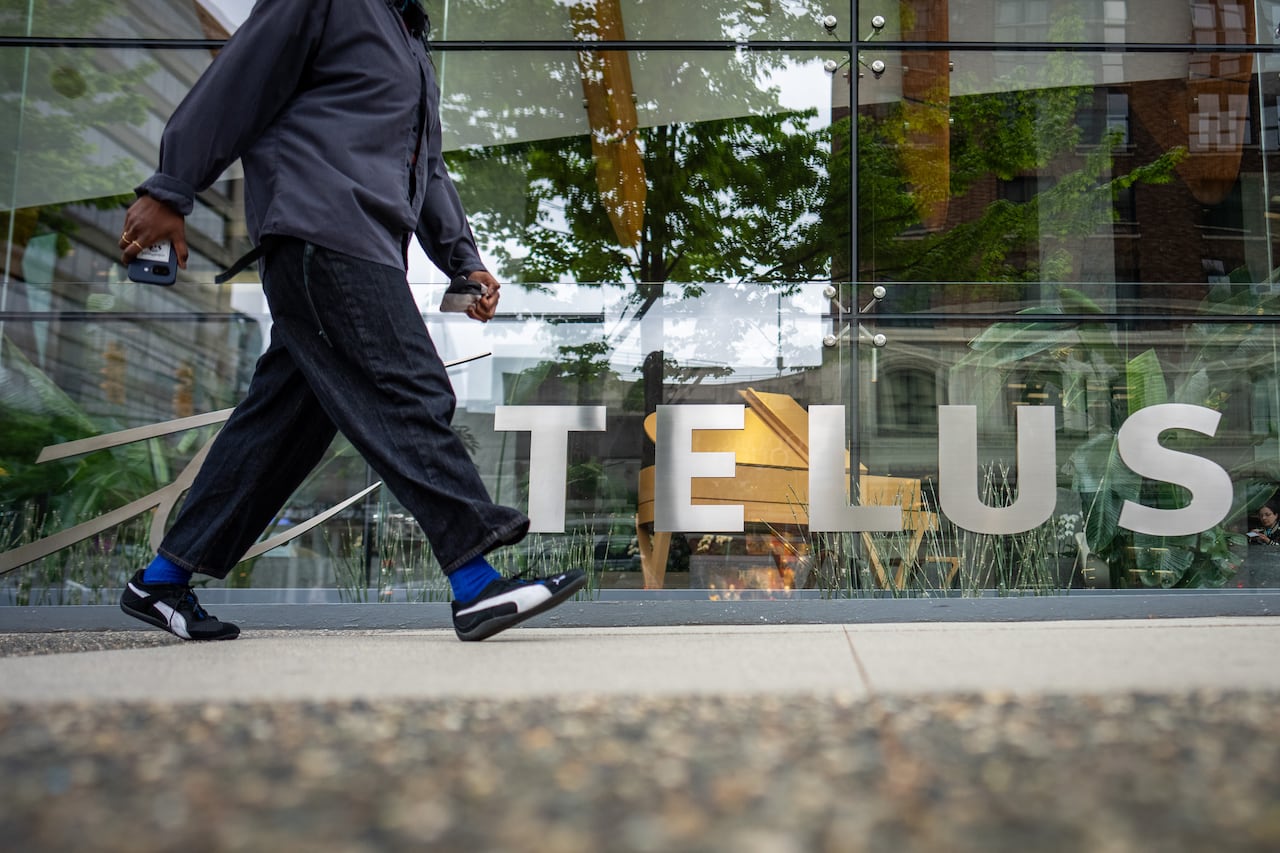
The headquarters of TELUS corporation at TELUS Garden in downtown Vancouver, British Columbia, on Wednesday, May 6, 2026. Telus’ board is currently evaluating the proposal from Quebecor but has expressed concerns that remain unaddressed by the Montreal telecom company. (Ben Nelms/CBC)
Telus has established a committee to assess the offer and determine the possible value of the deal. So far, the committee has identified several “significant risks,” according to John Manley, chair of Telus’s board of directors.
Manley stated that Quebecor “has not yet clarified how its proposal could be approved under the existing telecom regulatory framework in Canada, and a regulatory review of such a transaction would be lengthy and costly for our shareholders.”
Additionally, Telus has expressed concerns regarding how the Quebecor proposal values the company.
Manley mentioned that Telus would continue to engage with Quebecor, government officials, and regulatory bodies about these issues while also exploring alternative options.
Quebecor has indicated that it has enlisted experts to evaluate the proposed acquisition and any issues that may arise with regulatory authorities. The company is also prepared to discuss “measurable commitments” related to pricing, employment, and regional connectivity with those authorities, as stated in its release.
This potential acquisition could significantly alter the telecommunications landscape and represents the largest takeover in Canada’s telecom sector since Rogers Communications Inc. acquired Shaw in 2023. That deal received federal government approval with numerous conditions, including Rogers investing billions to enhance its broadband and wireless networks and committing to creating 3,000 jobs in Western Canada.
As part of that acquisition, Shaw’s Freedom Mobile was sold to Quebecor’s Videotron, which was required to offer lower-cost services comparable to those it provided in Quebec in other markets, among other stipulations.