

Customs officers in the United States performed a record-high number of electronic device searches on travelers entering the country last year. A recent update to their guidelines now includes additional devices such as smartwatches, SIM cards, and flash drives as items that may be searched.
In 2025, officers conducted searches on 55,318 computers, smartphones, and other electronic devices, marking a 17.6 percent increase from the 47,047 devices searched in 2024 and a 32.4 percent rise from the 41,767 devices checked in 2023, as reported by U.S. Customs and Border Protection (CBP).
CBP officials have not disclosed the proportion of these searches that occurred at either the northern border with Canada or the southern border with Mexico. Additionally, they have not provided a breakdown of searches conducted at airports versus land borders or by specific land border posts.
Basic device searches, which can be conducted without any reasonable suspicion of wrongdoing, increased from 42,725 in 2024 to 50,922 in 2025.
The count of advanced searches, wherein officers examine and/or copy the contents of an electronic device, saw a slight uptick to 4,396 from 4,322 in 2024 and 3,989 in 2023. According to CBP guidelines, officers may only perform advanced searches when they have reasonable suspicion of illegal activity or when national security is at stake.
While the number of searches on devices belonging to non-U.S. citizens has gradually increased, the searches of devices owned by American citizens have surged sharply—from 8,657 in 2023 to 13,590 in 2025.
Last year, the Canadian government updated its travel advisory regarding the United States, indicating that U.S. customs officers have the authority to search phones and laptops at the border. U.S. Ambassador Pete Hoekstra countered this claim, asserting that such searches are rare occurrences.
On the Canadian side, the frequency of searches and the percentage of travelers whose electronic devices have been examined by the Canada Border Services Agency (CBSA) while entering Canada are considerably lower, and these numbers have been decreasing in recent years.
In 2024, the most recent year for which comprehensive statistics are available, the CBSA performed 1,108 searches, leading to 498 violations.
In 2024, the U.S. CBP inspected the devices of 0.011 percent of the 420.5 million travelers, while the CBSA examined the devices of only 0.0012 percent of the 93.7 million travelers.
Karine Martel, a spokesperson for the CBSA, stated that the agency has long held a policy that electronic device examinations should not be routine. Court rulings in 2020 and 2022 have led to a higher threshold and limitations on the exercise of this power.
“Additionally, in 2021, the CBSA began requiring approval and review from chiefs and superintendents for personal digital device examinations carried out by border services officers, introduced more detailed note-taking requirements for such examinations, and mandated that officers complete an online training course regarding personal digital device inspections before being authorized to conduct them.”
Although the number of travelers whose devices are examined by the U.S. CBP represents a small percentage of those entering the U.S., experts like Esha Bhandari from the American Civil Liberties Union (ACLU) note that the frequency of electronic device searches by U.S. CBP officers has been increasing steadily over the years.
“What we’ve observed is a consistent annual rise in the number of searches,” Bhandari remarked. “It’s a gradual increase as the government acquires more technology that facilitates these searches.”
Bhandari mentioned that the ACLU has taken legal action regarding these searches.
“It’s essential for the courts to intervene and impose restrictions on these searches because they are highly invasive of privacy and do not serve valid government border interests.”
There have also been instances, according to Bhandari, where the government has utilized the CBP’s authority to search devices to bypass the need for a warrant.
Bhandari added that the U.S. Supreme Court has yet to rule on the constitutionality of these searches, and lower court decisions have varied, implying that CBP officers in certain regions may face more legal constraints regarding their ability to conduct searches on devices.
For instance, she noted that a Ninth Circuit Court ruling on the West Coast restricts device searches to the search for digital contraband. In contrast, courts in states like Florida, Georgia, or Minnesota have been more lenient.
“We currently have a patchwork of protections until the Supreme Court makes a ruling.”
-
Canada updates travel advice to warn of U.S. border officers’ power to search electronic devices
-
Canadians caught in crossfire as U.S. customs searches of electronic devices rises
In the meantime, a revision of the CBP directive, implemented in January, regulates the searches of electronic devices.
A line-by-line analysis conducted by CBC News comparing the new 14-page directive with its 12-page predecessor from 2018 indicates several modifications.
The former directive specified that it applied to “searching, reviewing, retaining, and sharing information found in computers, tablets, removable media, disks, drives, tapes, mobile phones, cameras, music and other media players, and any other communication, electronic or digital devices subject to inbound and outbound border searches.”
The revised directive clarifies that flash drives, SIM cards, GPS devices, unmanned aircraft systems, vehicle infotainment systems, and smartwatches are also subject to searches.
The previous directive identified several offenses that the searches aimed to uncover, including terrorism and national security concerns, human trafficking, bulk cash smuggling, contraband, child pornography, and crimes related to financial or commercial violations involving copyright, trademarks, and export controls.
The updated directive introduces additional offenses, including the smuggling of narcotics, firearms, or other merchandise and the transnational theft of proprietary information. It also “enables the discovery of digital contraband, such as child pornography, the illicit transfer of restricted or classified information, or other export-controlled information.”
In some instances, the directive tightens the rules or provides clearer guidelines regarding what an officer can or cannot do while searching a device, how long a device or its contents may be retained, and the regulations that apply if the CBP shares the device or its contents with other U.S. government agencies or law enforcement entities.
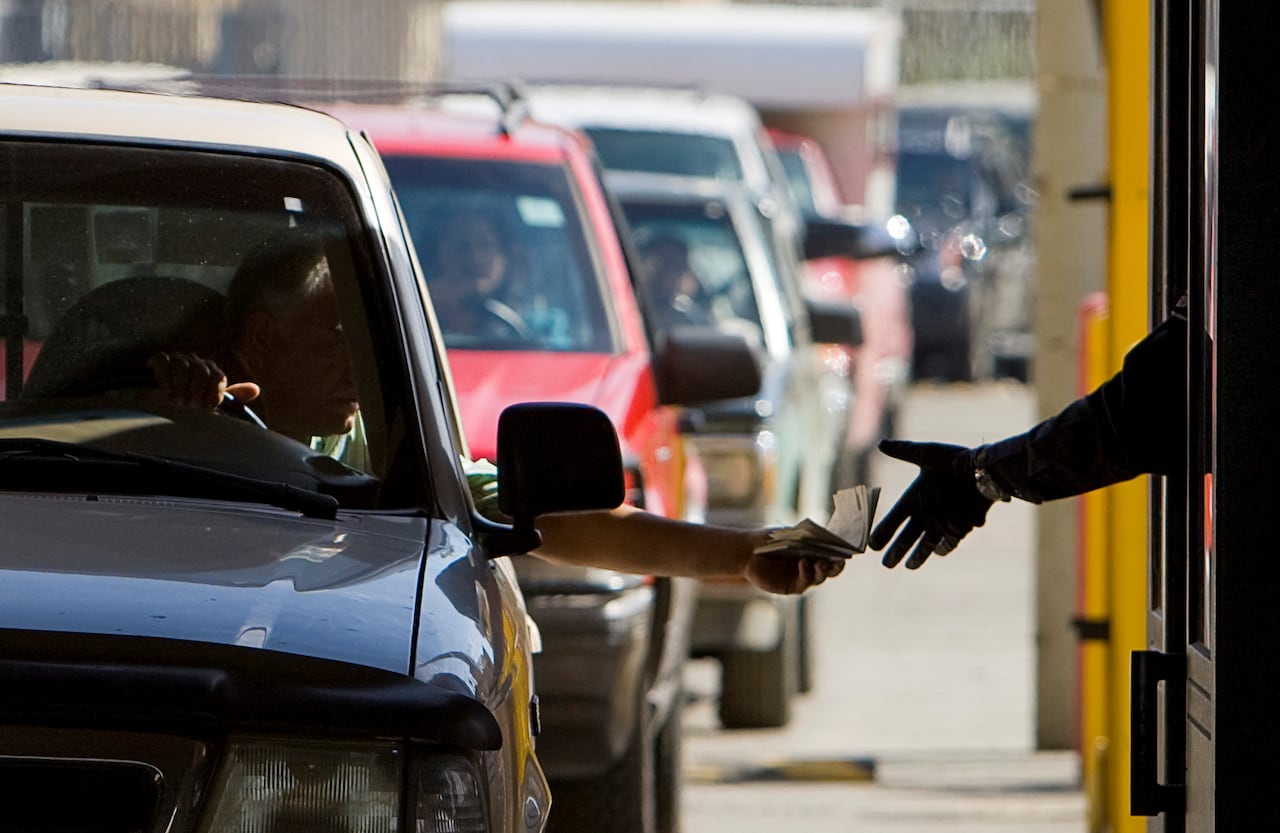
Border officers have the authority to search personal electronic devices when travelers enter the United States. (Fred Greaves/Reuters)
Jessica Jensen, an immigration attorney from Winnipeg with MLT Aikins, notes that she is observing indications of more thorough searches being carried out by CBP officers. She believes that the updated directive clarifies the rules surrounding searches.
“In my view, the directive is a step in the right direction because it provides clearer guidelines for officers regarding what they can do and when,” she stated.
Despite the directive’s expanded list of search-eligible devices, Jensen commented that officers would likely argue they previously had the authority to search them.
Jensen explained that the directive permits officers to search the contents on a device but not data stored on a cloud server or information requiring internet access, such as social media posts. Travelers are advised to log out of apps beforehand, eliminate any sensitive information, and switch devices to airplane mode prior to presenting them to a CBP officer.
“Ensure that your phone, laptop, or any other device you plan to travel with is in a condition where you are comfortable with an officer reviewing it.”
Jensen also mentioned that individuals have the right to refuse to surrender their devices, but this decision carries its own consequences.
“It’s crucial to remind everyone that you have the option to say no if you wish to,” she said. “Just be prepared for the fact that you may not be traveling to the U.S. that day if you decline their request to inspect your phone.”