

Following the commencement of the U.S. military operation in Iran, various national security entities, including the FBI and the Department of Homeland Security, began alerting the public about an increase in their operations nationwide due to an elevated threat of both international and domestic terrorism.
However, after a year marked by federal budget reductions, resignations, firings, layoffs, and a reorganization of the Trump administration’s focus, some experts in national security express concern regarding the capacity of these agencies to effectively respond.
Daniel Byman, who directs the Warfare of Irregular Threats and Terrorism program at the non-partisan Center for Strategic and International Studies in Washington, D.C., stated, “The administration has diminished U.S. capabilities in this domain, which might mean the United States is more exposed now than it was a year ago.”
Byman added, “Major organizations such as the CIA and FBI have experienced significant layoffs. We’ve observed reallocations of resources within these bodies. For instance, FBI agents have been reassigned from counter-terrorism efforts to immigration enforcement.”

U.S. ‘might be more vulnerable than it was a year ago,’ says Daniel Byman, director of the Warfare of Irregular Threats and Terrorism program at the non-partisan Center for Strategic and International Studies in Washington, D.C. (Submitted by Daniel Byman)
Javed Ali, a former employee of the Department of Homeland Security and the FBI, who now teaches about counter-terrorism and national security at the Gerald R. Ford School of Public Policy, pointed out that reallocating these resources and changing priorities carries inherent risks.
“If you shift focus from one priority to another, you must recognize that this could result in a heightened threat landscape, making it difficult to identify potential threats or monitor as many individuals as before,” Ali remarked.
He noted, despite the numerous budget cuts and exits from crucial organizations, counter-terrorism initiatives persist, although it remains challenging to assess their current effectiveness.
“It’s uncertain how significantly these changes have affected the nation’s capacity to proactively identify and disrupt plots or individuals before they can execute attacks,” he added.
When CBC News inquired about the number of personnel shifted to immigration duties before the U.S. military intervention in Iran, the FBI did not provide a direct answer but issued a statement indicating, “FBI personnel remain fully engaged nationwide and are ready to mobilize any necessary security resources to support federal partners.”
Homeland Security Faces Funding Issues
The attack on Iran coincides with the Department of Homeland Security being in a funding shutdown largely instigated by Democrats aiming to reform Immigration and Customs Enforcement practices. DHS was established in 2002 during the Bush administration after the 9/11 terrorist attacks, tasked with safeguarding Americans from domestic threats.
The DHS website, along with the National Terrorism Advisory System page, displays a red banner indicating that, “due to the lapse in federal funding, this website will not be actively managed.”
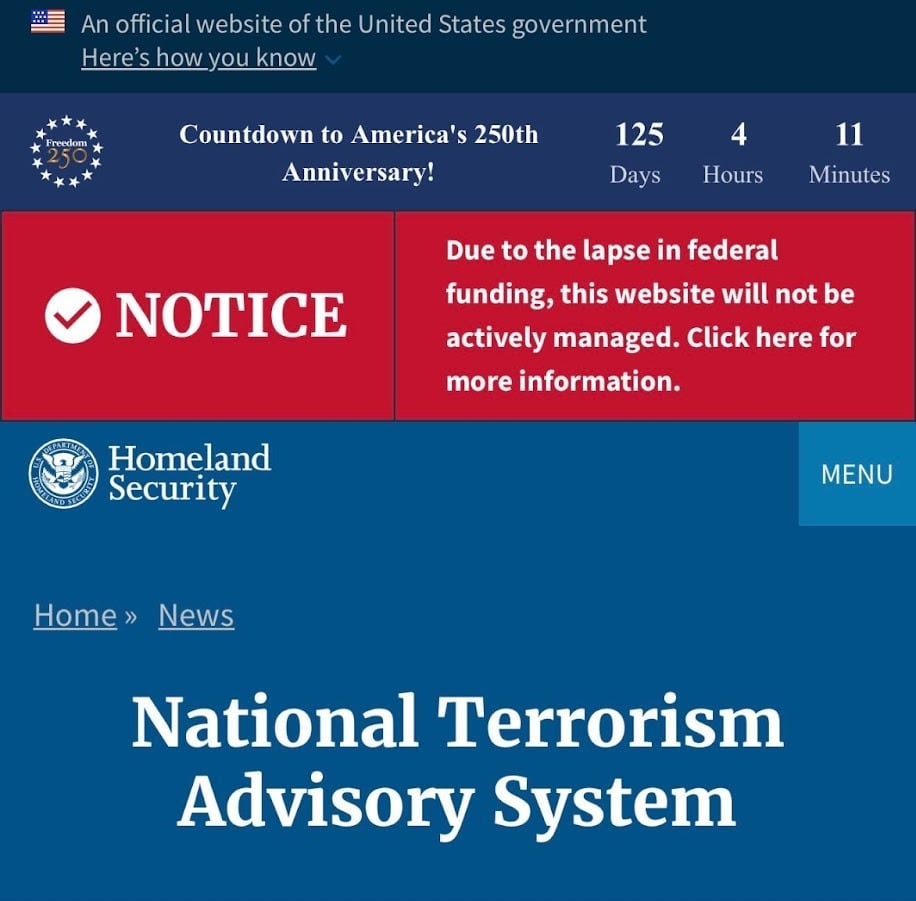
A red banner on the Department of Homeland Security site states ‘due to the lapse in federal funding, this website will not be actively managed.’ (Department of Homeland Security)
The DHS did not respond to CBC News inquiries about how the funding lapse might influence operations, but Homeland Security Secretary Kristi Noem did testify before a Senate committee on Tuesday.
During the hearing, Noem mentioned that hundreds of cybersecurity personnel had been furloughed during the shutdown, but when questioned about any potential threats from Iran, she said, “We collaborate every single day with our intelligence agencies and law enforcement partners to ensure we are investigating and identifying any threats within our borders.”
For the past year, former national security officials and members of Congress have raised alarms regarding job cuts, funding reductions, and shifts in focus within various agencies.
Recently, several states filed a lawsuit against DHS and FEMA seeking to restore funding to a counter-terrorism program.

U.S. Department of Homeland Security Secretary Kristi Noem testifies before a Senate committee to examine the Department of Homeland Security in Washington on Tuesday. (Jacquelyn Martin/The Associated Press)
In a Senate session last week, Senator Mark Warner indicated that between 25 to 45 percent of FBI agents engaged in counter-terrorism, cyber, espionage, and child exploitation cases had been reassigned to focus on the Trump administration’s immigration enforcement, which he claimed hindered the bureau’s capacity to thwart attacks.
Scott White, who heads the cybersecurity program at George Washington College of Professional Studies, expressed that he is not “excessively worried” about any diminishment in counter-terrorism capabilities.
“Since 9/11, many large municipal police departments have enhanced their operations, establishing dedicated counter-terrorism units,” he noted. “They are collaborating with various intelligence agencies.”
However, concerns about cybersecurity persist, particularly in light of Iran’s advanced cyber attack capabilities.
White stated, “I fully anticipate some cyber attacks in the near future, possibly within hours or days. We cannot predict their significance or potential advantages for the Iranians at this moment.”
Over the past year, the U.S. Cybersecurity and Infrastructure Security Agency (CISA) has reduced its workforce by approximately one-third, but White asserted that robust defenses remain intact.
“We still have the NSA (National Security Agency) actively engaged in electronic surveillance. They are part of the Five Eyes alliance,” he said.
White also mentioned that private firms like Crowdstrike frequently contribute to intelligence-gathering efforts by monitoring cyber threats.
Byman expressed concern that some agencies tasked with national safety may have become politicized.
“Leadership has emerged which has insisted on political allegiance to the administration rather than adhering to the traditional expectation of non-partisanship,” Byman explained. “There are worries that analyses may be swayed or weakened because of an intent to satisfy political factions.”
Iran May No Longer Exercise Restraint
In June, when the U.S. initiated airstrikes on Iran’s nuclear sites, there were concerns about possible attacks from Iranian sleeper cells or other proxies on American territory. However, such threats did not materialize.
Byman suggested that, considering the current conflict and U.S. calls for regime change, the situation might be different this time.
“They might be reflecting and concluding that circumstances cannot worsen, leading them to feel there is no reason to exercise restraint currently,” he noted.
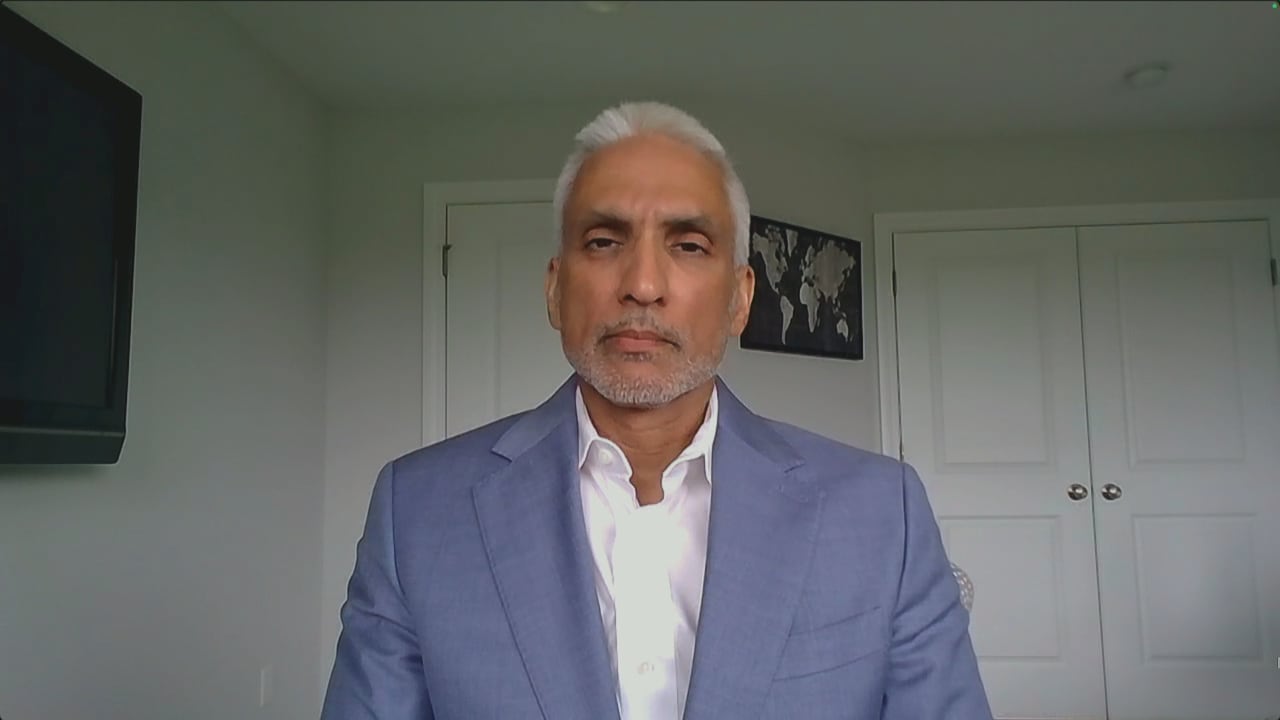
Former White House counter-terrorism official Javed Ali indicates it remains uncertain what effects U.S. government cuts and reorganizations have had on counter-terrorism capabilities. (CBC)
Ali mentioned that any potential terror attacks would likely manifest as a “lone wolf” situation — typically an individual sympathetic to a cause who may not be on any official watchlist.
“This type of threat is always challenging to detect and preempt,” he remarked. “I believe this is the kind of terrorism that my former colleagues in law enforcement and intelligence will need to contend with.”
“We’re particularly focused on Iranian sympathizers and proxies operating within the U.S., rather than solely on Iranian operatives,” White clarified.
Experts have indicated that while “hard targets” like government structures will be well-protected with enhanced security measures, more vulnerable “soft targets,” such as community centers, religious sites, and even U.S.-branded hotels and restaurants, could face greater risks.
“Soft targets will be present throughout Europe and even in Canada,” he stated. White, a former CSIS officer, emphasized that Canadians would need to rely on CSIS, the RCMP, and large municipal police forces.