


As the century mark approaches for the two-day weekend, calls for a reevaluation of the traditional workweek are gaining momentum.
Grace Tallon, co-founder of Work Time Revolution, a consultancy firm in Toronto, highlights the significant societal shifts since the establishment of the two-day weekend a century ago, emphasizing the need for modernization.
Labour historians and advocates for workweek reform underscore the changing landscape globally, noting the disparity in workforce composition compared to a century ago.
Tallon points out the outdated nature of the current five-day workweek, especially in the context of predominantly dual-income households today.
Experts emphasize the adaptability of the concept of weekends, suggesting room for evolution based on societal needs.

Grace Tallon, co-founder of Work Time Revolution, highlights the significant changes in work and lifestyle since the last review of the workweek structure. (Submitted by Grace Tallon)
Origins of the Two-Day Weekend
In the late 19th and early 20th centuries, a six-day workweek was customary, with long hours being the norm.
Labour historian Craig Heron, a retired professor from York University, notes the historical context of the weekend, rooted in religious observance and evolving through labour movements.
While Henry Ford is often credited with popularizing the two-day weekend, the journey towards this structure involved substantial efforts by labor activists over several decades.
Notable achievements in work hour reforms were seen in different industries, such as the printers’ successful campaign for an eight-hour workday around 1910.
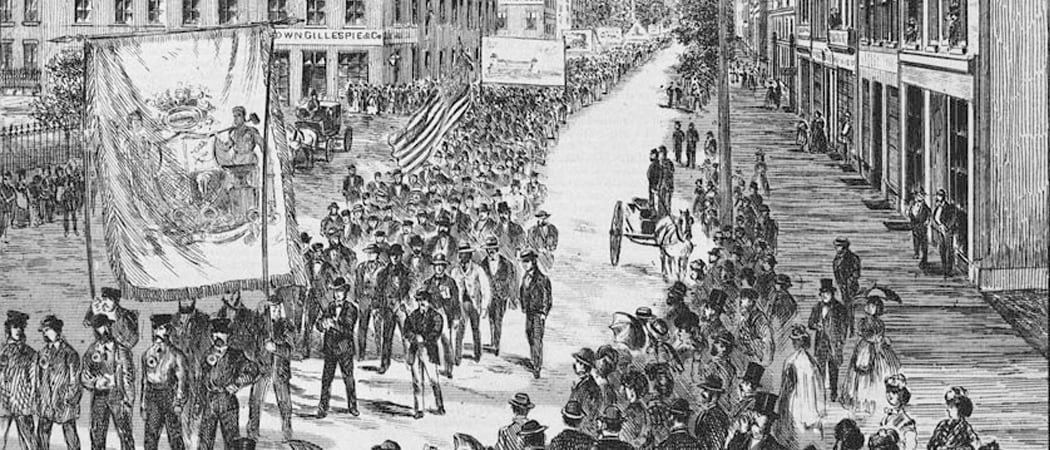
An illustration from the Canadian Illustrated News showcasing a Nine-Hour Movement protest in Hamilton, Ont., 1872, influencing significant labor reforms. (Canadian Illustrated News/Library and Archives Canada)
Ford’s announcement in October 1926 regarding the adoption of a five-day workweek marked a pivotal moment, later endorsed by organizations like the American Federation of Labor.
<p