

Scientists have recorded footage of wild wolves in British Columbia extracting crab traps from the ocean using their lines to access the bait inside, marking the first indication of potential tool use among these creatures.
A study published on Monday in the peer-reviewed journal Ecology and Evolution by researchers Kyle Artelle and Paul Paquet details how they installed cameras along the beach aimed at crab traps belonging to the Heiltsuk First Nation to investigate the source of repeated damage.
The traps, located near Bella Bella on the central coast of B.C., were set to manage the invasive European green crab population. Some traps were permanently submerged in deeper waters, prompting researchers to suspect that marine mammals were responsible for the damage observed since 2023.
“We were thinking, ‘What on earth could be causing this?’” said Artelle, a researcher at the State University of New York’s College of Environmental Science and Forestry, who collaborates with the Heiltsuk Nation to address the green crab issue.
“It can’t be a bear or a wolf. They wouldn’t dive down to reach the trap. So, what could be accessing the traps?”
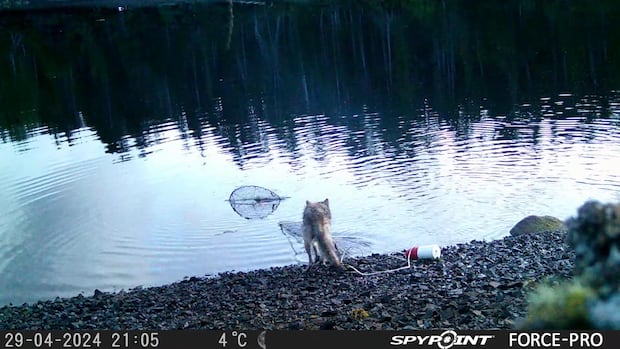
In this video footage from researchers Kyle Artelle and Paul Paquet, sea wolves in central B.C. are seen pulling up crab traps — in what researchers say may be the first use of tools by the species.
Their initial theories were incorrect.
Within just one day of setting up the cameras in May of the previous year, the researchers recorded a sea wolf surfacing with a buoy in its mouth.
The footage showed the wolf dropping the buoy on the shore, grabbing the visible line, and tugging it until the crab trap surfaced.
The wolf then picked up the trap with its mouth, transported it to shallower water, and consumed the bait inside.
“We were completely astonished,” Artelle remarked.
“We know they are incredibly intelligent, but it never occurred to us that a wolf might swim to deeper traps, bring the buoy to the beach, and pull the line as a human would.”
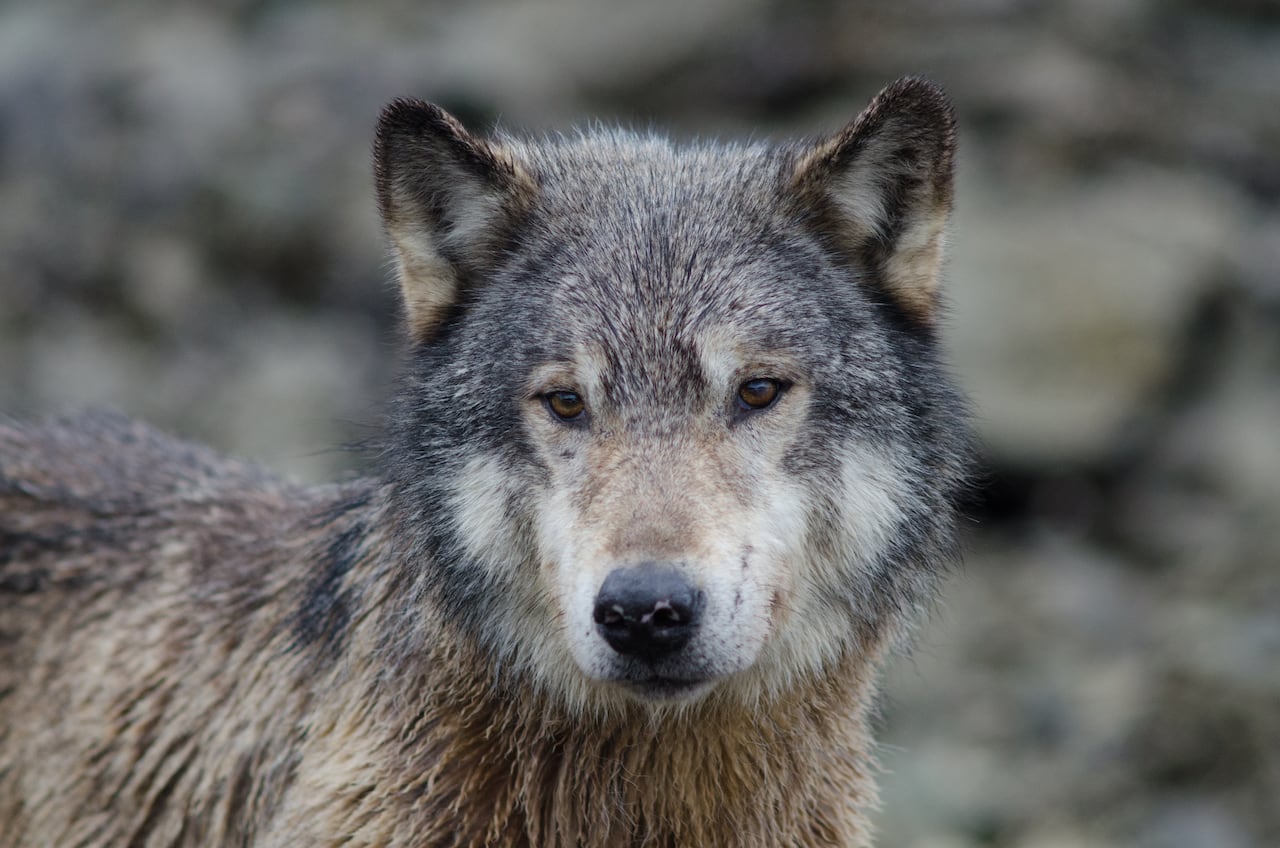
Sea wolves are a subspecies of grey wolf. (Submitted by Kyle Artelle)
The cameras subsequently recorded another sea wolf also retrieving a crab trap in a similar manner earlier this year, suggesting that other wolves in the pack may have learned this behavior from each other.
Sea wolves are a subspecies of grey wolf that are recognized for their diet primarily consisting of marine life.
Regarding the origins of this behavior, Artelle mentioned that researchers can only hypothesize.
“Ultimately, we are unsure, but two plausible explanations come to mind; one possibility is that the wolves began interacting with traps that were left exposed during low tide since that would be quite simple,” Artelle explained.
“There may have been a gradual learning process, starting with traps fully onshore, then moving to partially submerged traps, and finally making connections between the line and trap, as well as the buoy and line… It’s a logical progression, and that’s often how we acquire knowledge.”
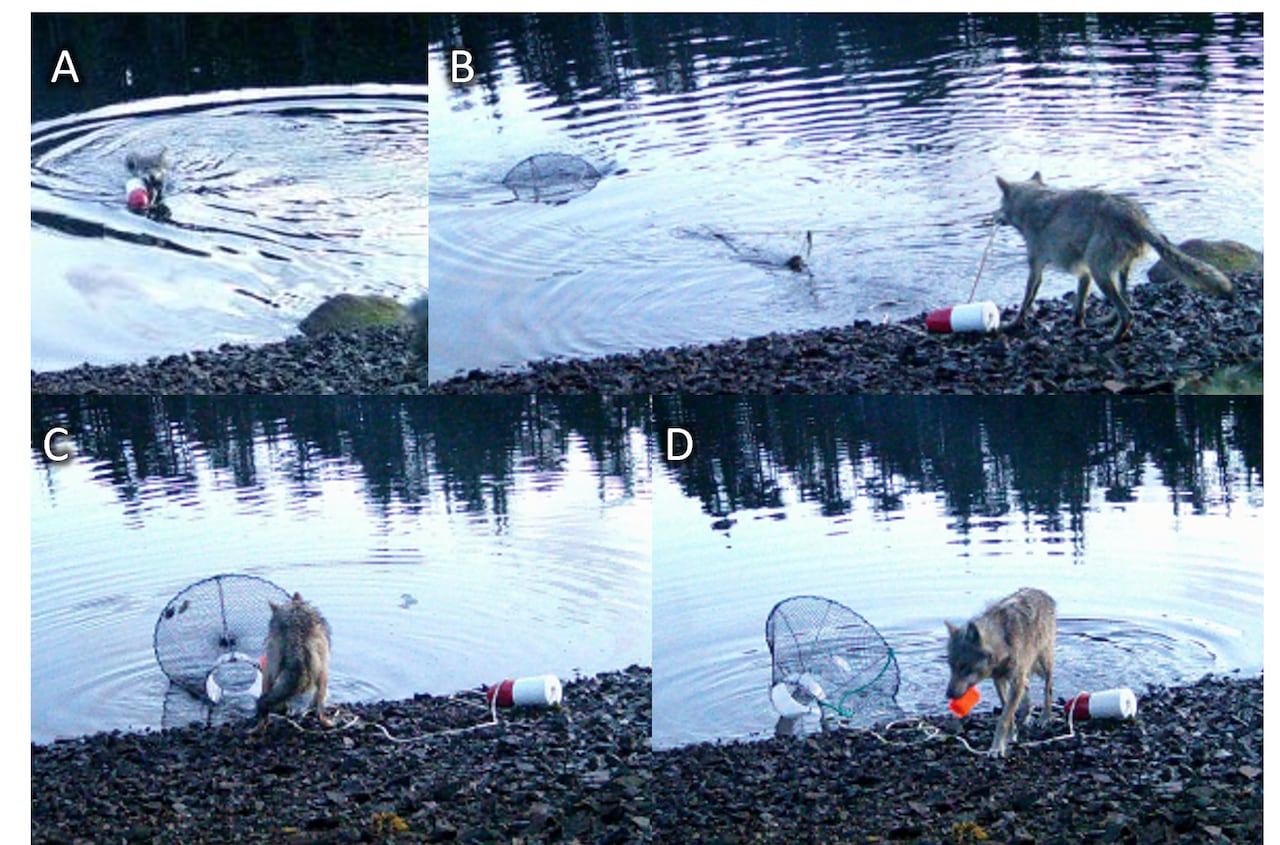
This image from the researchers’ videos shows how exactly the wolves pulled up the traps. (Submitted by Kyle Artelle and Paul Paquet)
Currently, several cameras at the B.C. site are operational around the clock to monitor the behavior of sea wolves in the vicinity, while measures are being developed to minimize damage to the traps that could hinder the invasive crab research.
“Remarkable things are unfolding here, and we aim to learn more about it. What else is happening locally? What additional insights can these wolves provide us? This will be a primary focus for us in the coming decades as we investigate further into wolf behavior in this area,” Artelle stated.
“This is truly just the beginning.”
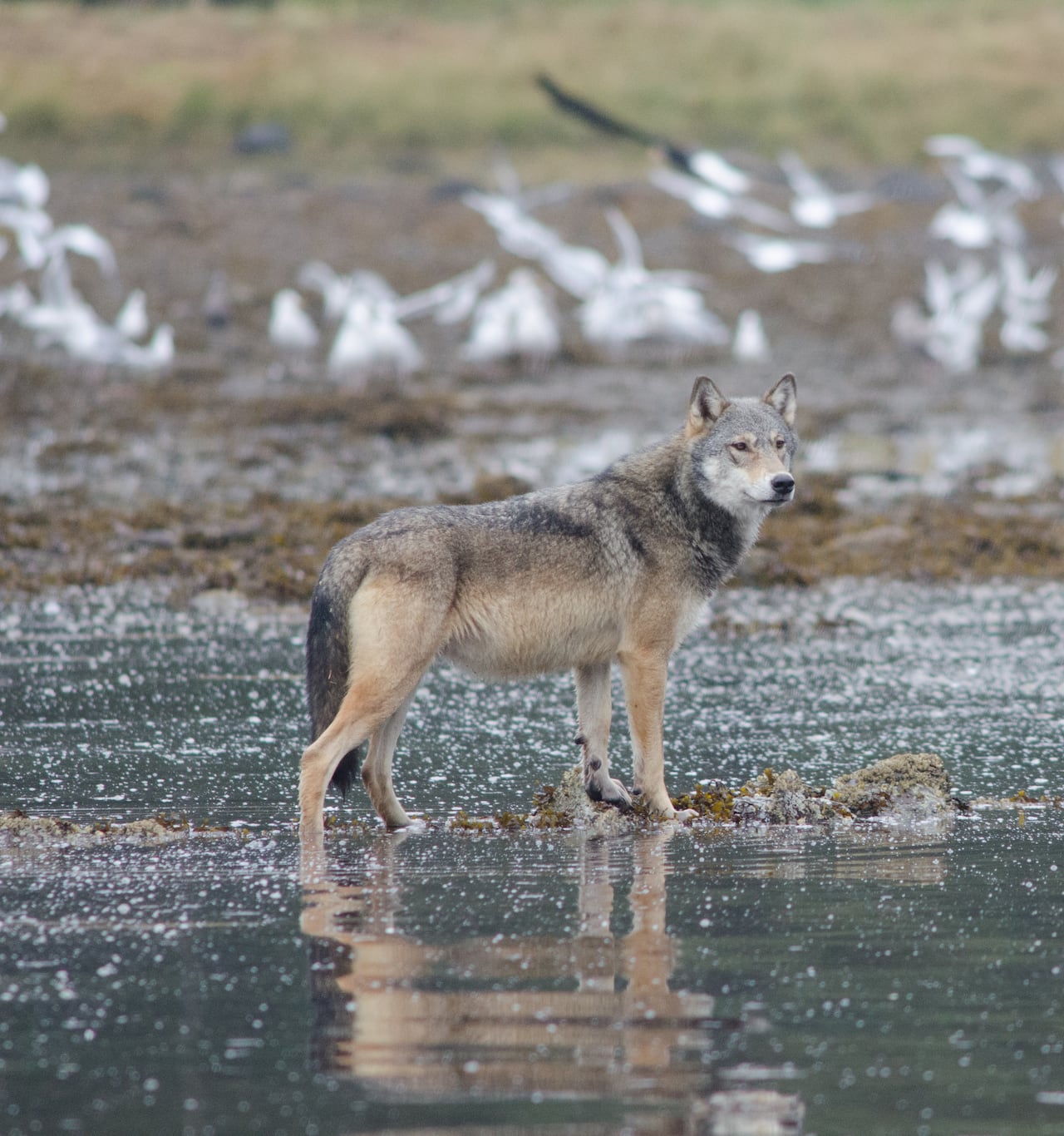
Researchers assert that the video represents merely the initial findings as they enhance their understanding of wolf behavior. (Submitted by Kyle Artelle)
Marc Bekoff, a professor emeritus of ecology and evolutionary biology at the University of Colorado in Boulder, expressed enthusiasm about the study, referencing pioneering research by figures like Jane Goodall on tool use among other mammals such as chimpanzees.
“This adds another dimension to the understanding that wolves are remarkably intelligent. They are highly adaptable creatures,” Bekoff, who was not part of the research team, remarked to CBC News.