

In December, Samuel Scrivens was in his bedroom when he conceived the idea of creating an autonomous underwater drone.
Scrivens shared with CBC News, “I envisioned a concept that could transform the utilization of autonomous underwater vehicles.”
He contacted his friend and former classmate from Carleton University, Shrey Naphade, to discuss his vision of a portable drone that could conveniently fit in a backpack.
The objective was to design a versatile drone suitable for underwater inspections, defense missions, or surveillance tasks.
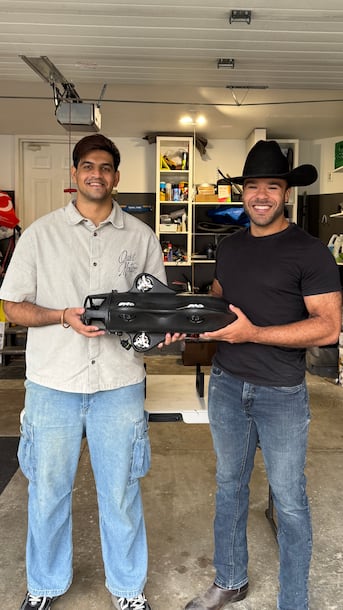
Waterloo’s Shrey Naphade and Samuel Scrivens created an underwater drone in response to the industry’s demand for smaller, portable options. They launched a company named Pelagos and 3D printed a prototype of their compact drone, Vantage. They have now acquired their first customer.
Naphade recalled, “It all began with a Discord call. One call led to two, then three, and soon we had a written plan. What’s next?”
The duo started gathering funds to construct a prototype. Scrivens moved into Naphade’s parents’ residence, and they spent five months working in the garage, sometimes until the early hours.
Their initial design of the drone was sketched on a napkin and later developed into a 3D printed model featuring propellers crafted from hardware store components.
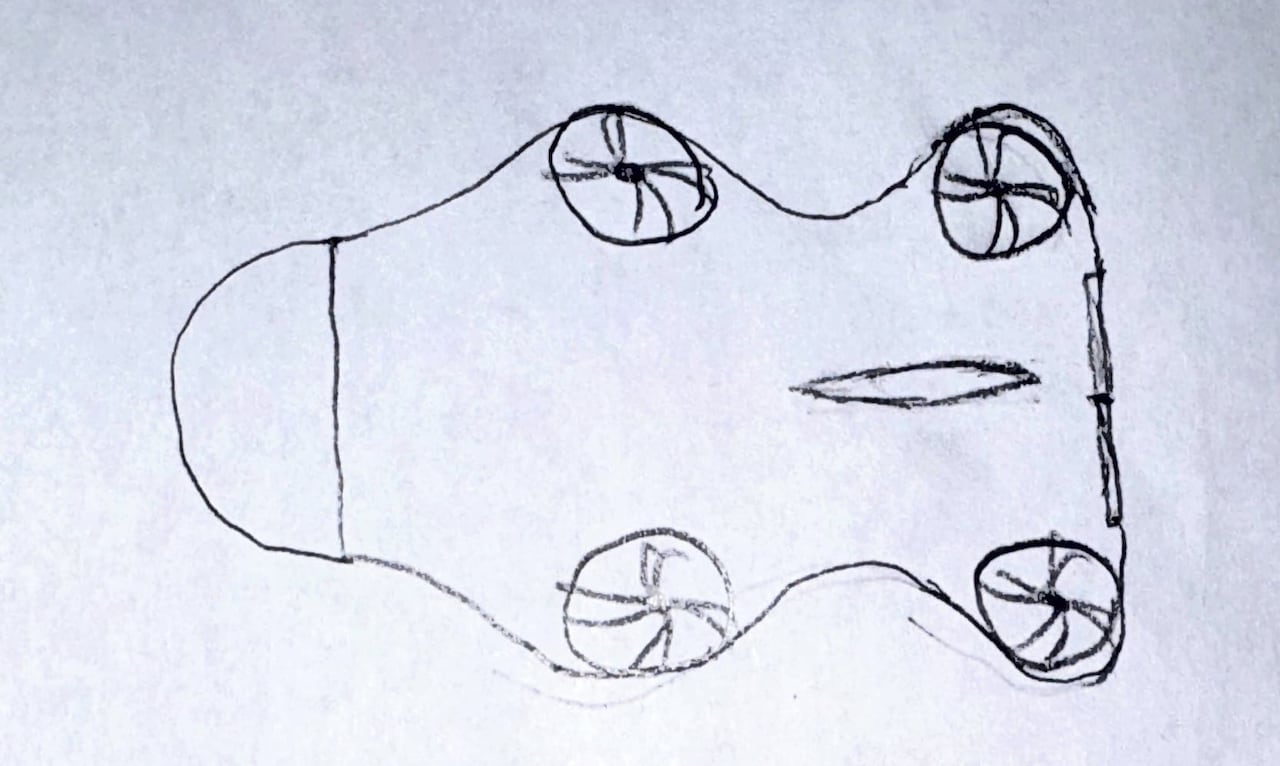
The first drawing of Vantage, Pelagos’ underwater drone prototype, on a napkin. (Submitted by Pelagos)
After assembling their prototype, Vantage, the next phase involved testing for leaks in their neighbor’s pool.
This September marked the acquisition of their first customer.
Drone can be carried like a surfboard
TEKMARA, a US-based firm, specializes in AI-driven infrastructure for oceanic and offshore applications, focusing on underwater defense, marine protected areas, and various maritime surveillance activities.
Founder Todd Kleperis expressed that he chose to collaborate with Pelagos because of the distinctive design of their underwater drone, which stands out from the conventional models in the industry.
According to Kleperis, the Pelagos drone offers easier deployment, enhanced maneuverability, and a lower cost. He anticipates deploying the drones in the coming year.
“Most AUVs [autonomous underwater vehicles] on the market tend to have a tubular shape, resembling torpedoes,” Kleperis noted.
Scrivens and Naphade aimed to break away from the torpedo-style design, opting instead for a drone that can turn sharply and hover in water.
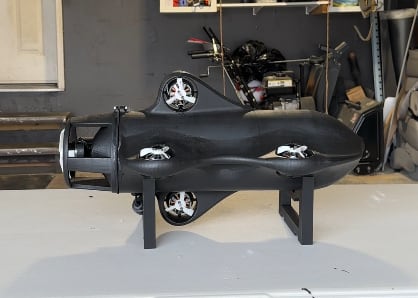
Prototype of the underwater autonomous drone, designed by Scrivens and Naphade. (Lauren Kuivenhoven/CBC)
Scrivens highlighted that the primary distinction between their drone and conventional underwater drones is its portability; it can be carried like a surfboard.
Kleperis stated that the drones will be utilized in various sites, including Aquarius Reef Base, an underwater research facility off Florida’s coast.
These drones will monitor the area for sharks and assess the types of fish present.
Currently, Scrivens and Naphade are accumulating funds to construct their first pilot based on the prototype design, which will be the unit they provide to operators such as TEKMARA.