

Public Safety Minister Gary Anandasangaree has criticized U.S. technology companies for “misunderstanding” his proposed lawful access legislation, which aims to expedite police and intelligence agencies’ access to Canadians’ data during investigations. This proposal is encountering increasing opposition in the United States.
The proposed Bill C-22 would mandate telecommunications, internet, and social media firms to modify their systems to facilitate easier access to data for law enforcement and the Canadian Security Intelligence Service (CSIS), contingent on obtaining a warrant. Additionally, it would obligate key service providers to store metadata for a duration of up to one year.
This bill has garnered backing from police chiefs nationwide and CSIS, who assert that they are hindered by outdated laws in an increasingly digital landscape.
As the second version of a lawful access bill from the government, it has come under significant examination from privacy and civil liberties advocates within Canada. Currently, the bill’s requirements for private entities are facing strong resistance from some of the largest technology firms globally, as well as from two congressional committees in the United States.

Visitors capture images at a sign outside Meta’s headquarters in Menlo Park, California, on March 26, 2026. (Noah Berger/The Associated Press/File)
Apple and Meta, the parent company of Facebook and Instagram, have recently expressed their concerns, indicating that the Liberal government’s legislation could jeopardize their encryption services and expose them to cyber threats.
During a parliamentary committee meeting last week, Rachel Curran, Meta’s head of public policy in Canada, cautioned that the bill would “draft private companies into service as part of the government’s surveillance framework.”
The bill includes a provision stating that electronic service providers are not obligated to comply if doing so would create a “systemic vulnerability.” Nonetheless, critics contend that the definition of systemic vulnerability is ambiguous and should be revised to explicitly prevent any actions that could undermine or compromise encryption.
“Creating back doors in encrypted systems for law enforcement is impossible without also generating weaknesses that could be exploited by malicious entities,” Curran emphasized in her prepared statements.
“The weakening of encryption impacts not just the individual under investigation but all Canadians who depend on secure communications for banking, healthcare access, business operations, or simply staying in touch with family and friends.”
-
Apple claims Liberals’ lawful access bill could jeopardize users’ personal data
-
Liberal bill would mandate companies to simplify data access for law enforcement. The costs remain unknown
In a statement issued last week, Apple, which employs encryption to safeguard users’ health information, family locations, messages, photos, and financial data, hinted it might retract certain privacy features if Bill C-22 is enacted without amendments.
The company discontinued its most robust data security feature — the Advanced Data Protection program — for customers in the U.K. last year following a request from the British government to create a backdoor for accessing the content.
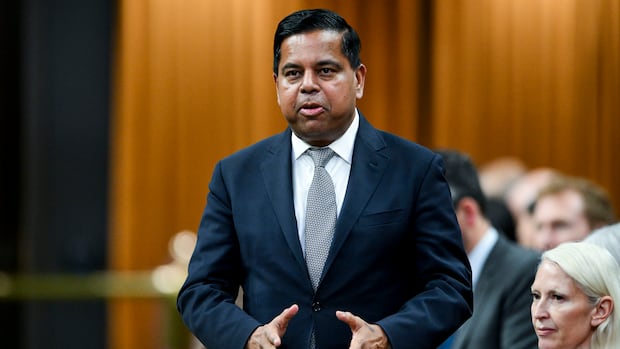
Public Safety Minister Gary Anandasangaree stated that ‘we need to provide better information’ to Canadians and all relevant parties regarding Bill C-22, Ottawa’s proposed lawful access legislation, which is encountering resistance from U.S. tech firms.
“This legislation could empower the Canadian government to compel companies to compromise encryption by implementing back doors in their products — something Apple will never accept,” the company stated in its public remarks.
“In light of growing and widespread threats from malicious actors seeking user information, Bill C-22, in its current form, would weaken our capacity to provide the robust privacy and security features that users expect from Apple.”
During a press conference on Wednesday, Anandasangaree remarked that major tech companies are “seizing this as an opportunity to reinforce their positions.”
“Tech giants are misreading certain safeguards that are already integrated, particularly those ensuring that encryption remains unaffected by Bill C-22,” he stated.
U.S. congressional committees take notice
Two congressional committees in the United States have also taken an interest in the Canadian legislation.
In a letter sent to Anandasangaree late last week, Republican representatives Jim Jordan, chair of the judiciary committee, and Brian Mast, who heads the foreign affairs committee, expressed that the bill would “significantly enhance Canada’s surveillance and data-access authority in ways that pose substantial cross-border risks to the security and data privacy of Americans.”
“American firms operating in Canada would confront a challenging choice: jeopardizing the security of their entire user base — including U.S. citizens — or risking exclusion from the Canadian market,” the letter stated.
-
New lawful access legislation would enhance police and CSIS capabilities to monitor suspects online
-
With the fate of Bill C-2 uncertain, the spy agency contends its operational effectiveness is ‘eroding’
“Either scenario threatens U.S. national security and economic interests by eroding confidence in American technology and inviting similar demands from other countries.”
Anandasangaree stated that the issues raised in the letter indicate “we have more educational work to undertake.”
“We need to better inform not only Canadians but all stakeholders observing the bill about the critical safeguards embedded within it,” he said.
The requirements for technical assistance in the bill stem from feedback from police and CSIS regarding inconsistencies and unreliability when dealing with service providers during urgent investigations.
The government asserts that the proposed changes would furnish investigators with an organized system akin to a “filing cabinet,” where specific types of information would be accessible with legal authorization.
“We anticipate support from various parties,” Anandasangaree commented. “And we expect to accomplish this.”