

Scientific studies indicate that diminished snowpack levels in Vancouver Island are expected to strain salmon populations already coping with habitat degradation, overfishing, and rising temperatures.
According to the most recent snowpack assessment released by the province, Vancouver Island’s snowpack levels were recorded at 44% of the normal level as of April 1.
Experts point out that reduced snowpack levels will result in rapid snowmelt during spring, causing decreased water levels and dried-up pools when adult salmon attempt to return up rivers in the autumn from their breeding sites.
Researchers emphasize the importance of the province collaborating with local communities to safeguard watersheds and salmon populations, and to address the impacts of climate change in order to assist struggling salmon.
“Especially with the warmer temperatures that could hit us in the summer, it could spell disaster,” noted Aaron Hill, executive director of the Watershed Watch Salmon Society, regarding the low snowpack levels.
Hill highlighted a recurring cycle of droughts and floods in the province that is exerting significant pressure on salmon populations.
Tom Balfour, a habitat biologist at the Redd Fish Restoration Society on the western coast of Vancouver Island, warned that certain pools where juvenile salmon congregate during the summer might experience extensive die-offs, impacting larger salmon populations.
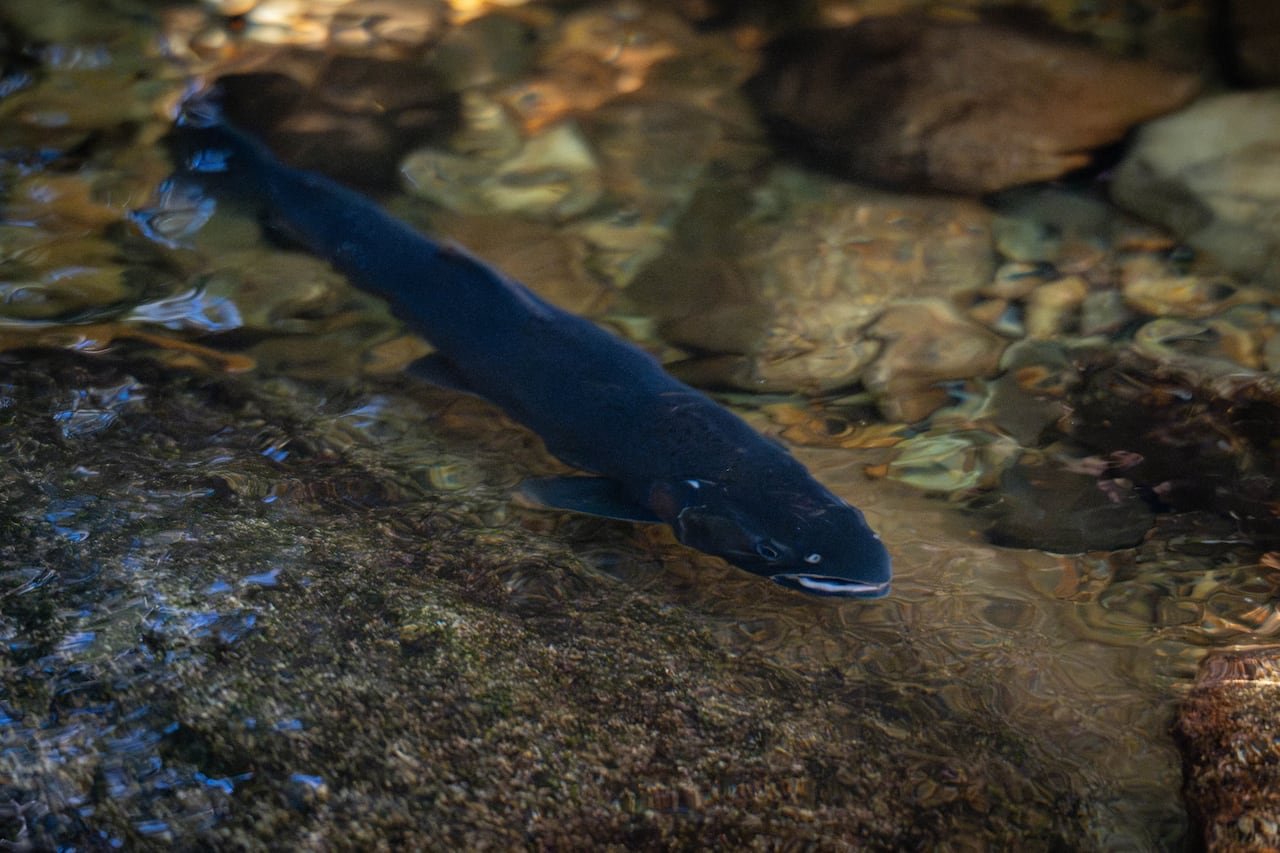
He added that faster snowmelt due to diminished snowpack levels can significantly impact the life cycle of salmon as they adapt to increased water flow in the spring.
The biologist urged the public to advocate for governments to implement long-term conservation and restoration strategies for watersheds, while also remaining vigilant for stranded fish and drying pools during the spring and summer.
“One thing lacking in this province is adequate monitoring,” he remarked.
“So, it is up to us, the public, to observe and raise concerns when necessary.”
Advocating for Enhanced Local Collaboration
John Richardson, a professor in the forest and conservation sciences department at the University of British Columbia, stated that streams and lakes with reduced water volumes due to decreased snowmelt might leave salmon more susceptible to predation.
He proposed that the forestry industry in the province should take proactive measures to maintain more trees near smaller streams, providing crucial shade for the fish.
He argued that smaller streams could experience elevated water temperatures as they flow into larger rivers and streams, causing stress to salmon sensitive to high temperatures.
“[Stream shading] is a form of climate-proofing, one of the few actions we can take to potentially mitigate some temperature changes in streams due to global climate change,” he explained.