

The leader of Elections Canada has stated that the electoral reform legislation proposed by the Liberals does not sufficiently tackle worries regarding individuals trying to undermine confidence in the nation’s electoral system.
Stéphane Perrault, the Chief Electoral Officer, expressed his general support for Bill C-25 during his testimony to MPs on the House procedures committee. However, he noted that the bill could enhance its measures against the proliferation of disinformation.
Perrault remarked, “This bill fails to address scenarios where misleading information about the electoral process is circulated with the intent to erode trust in the election or its outcomes,” during his comments on Thursday.
Introduced in Parliament in late March, C-25 encompasses several reforms aimed at curbing both foreign and domestic political meddling. This includes regulations against foreign contributions, bribery, the dissemination of false information, and the use of AI-generated deepfakes involving candidates.
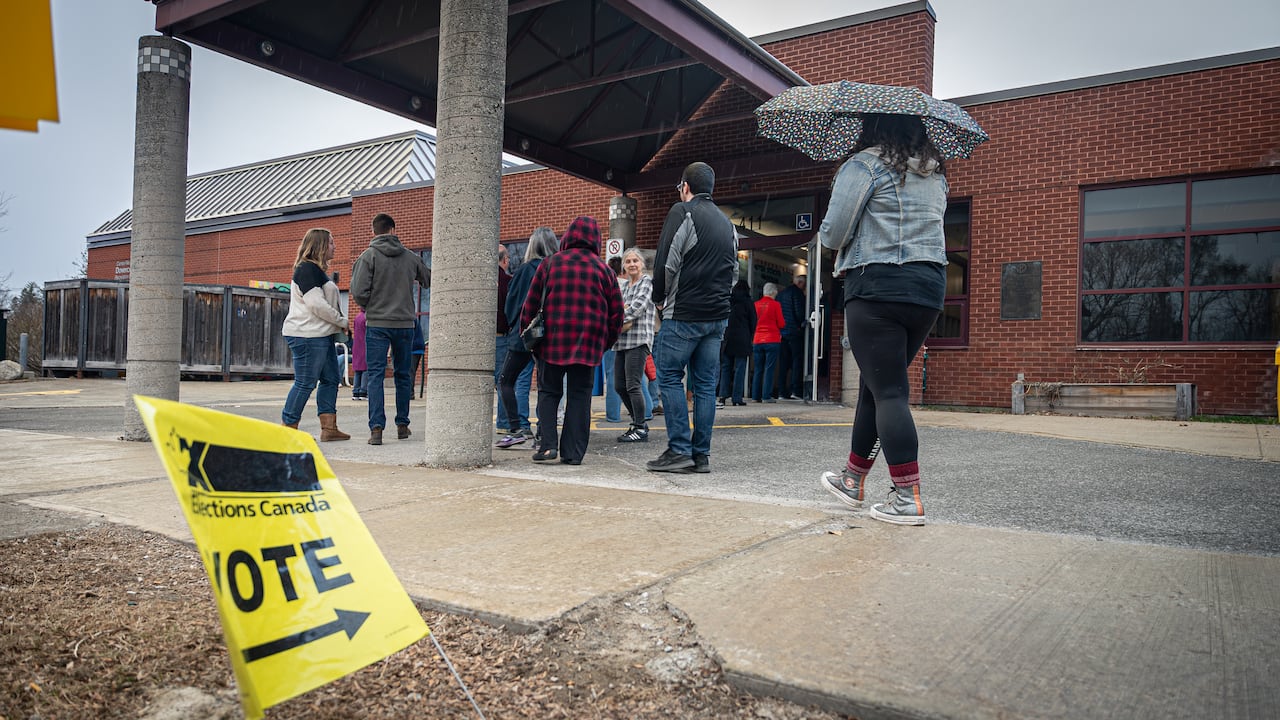
C-25 was tabled in Parliament in late March and includes a number of reforms meant to crack down on foreign and domestic political interference in Canada’s electoral process. That includes foreign donations, bribery, disinformation and AI deepfakes of candidates. (Brian Morris/CBC)
The legislation explicitly makes it illegal to publish false information regarding the electoral process with the intent of influencing the vote. However, Perrault pointed out that existing Canadian election laws already prohibit the dissemination of such misleading information and that these laws have previously been utilized to target wrongdoers.
The Chief Electoral Officer suggested that the bill should be revised to specifically encompass the spread of misinformation designed to weaken public trust in the electoral system.
“If an individual is intentionally disseminating false information to compromise confidence in the election’s outcome, or in the election itself, there must be a provision within the act to address this issue,” he stated.
Perrault illustrated a theoretical scenario involving the distribution of altered images or videos depicting “stolen or destroyed ballots.” He also emphasized that the threshold for such a violation should be high, so as not to include mere critiques of “the process or its administration.”
Concerns Arising from Alberta
Caroline Simard, the Commissioner of Canada Elections, was also present at the committee on Thursday to discuss the proposed law. However, Simard faced inquiries regarding a recent incident involving the leak of a voter list in Alberta.
The leak is currently under investigation by Elections Alberta and the Alberta RCMP after a separatist organization known as the Centurion Project published an online database compiled from information in the June 2025 electors list.
This list includes personal details of all individuals registered and eligible to vote in Alberta’s provincial elections at that time.
Elections Alberta has found that the voter information utilized by the Centurion Project was legitimately acquired from the Republican Party of Alberta.
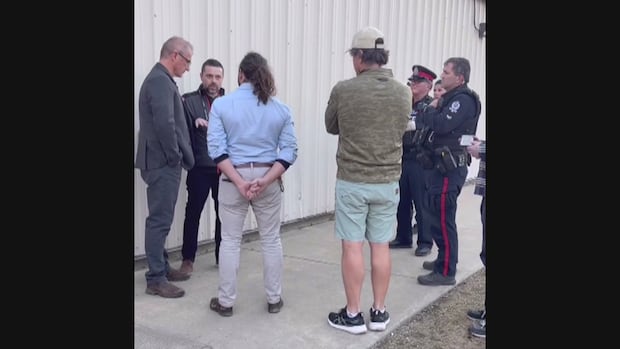
Alberta RCMP and Elections Alberta are investigating the pro-Alberta independence group Centurion Project after it posted a public database of voters’ names and personal information.
Although the provincial electoral agency secured a court injunction last week mandating the separatist group to eliminate the online database, there are concerns about whether Elections Alberta could have acted more promptly.
Jen Gerson, a journalist and political analyst who co-founded The Line on Substack, mentioned that she reached out to Elections Alberta on March 31 after receiving a tip about information on a website managed by the Centurion Project that seemed to be derived from the provincial voters list.
She stated that an Elections Alberta investigator contacted her the following day. Ten days later, she received a letter from Elections Commissioner Paula Hale indicating that while her evidence was compelling, the agency was unable to proceed with an investigation.
In a recent email to CBC News, an Elections Alberta spokesperson explained that the Election Finances and Contributions Disclosure Act, which was enacted last year, raises the threshold for initiating an investigation.
“The legislation mandates that we must possess ‘reasonable grounds to believe an offence has occurred’ before we can commence investigations,” Michelle Gurney wrote.
-
Elections Alberta issues cease-and-desist letters over voter info breach, privacy commissioner launches probe
-
Alberta voters list leak puts domestic violence victims on edge, organizations say
-
Russia and U.S. amplifying Alberta separatist narratives to stoke division, distrust: report
During the committee session on Thursday, Alberta Liberal MP Matt Jeneroux inquired of Simard about the situation in Alberta.
He asked, “Can you confirm that you can initiate an investigation independently, and that a complaint does not need to meet a certain minimal threshold to trigger an investigation, unlike what I believe occurred in Alberta?”
Simard replied that she could only address the Alberta case based on publicly available information, but indicated that if similar evidence were presented to her, she could initiate an investigation.
She added, “According to the Elections Act, I can start an investigation on my own initiative. In such a hypothetical case, if this were to happen federally, the option to initiate an investigation does indeed exist,” Simard said in French.