

A significant blackout on Wednesday left millions in Havana and western Cuba without electricity, marking the latest disruption for an island grappling with diminishing oil supplies and a deteriorating power grid.
Radio Rebelde, a government radio outlet, reported that an energy official indicated it might take as long as 72 hours to resume operations at one of Cuba’s major thermoelectric power facilities, which had ceased functioning earlier, triggering the outage.
The national electric utility shared on social media platform X that the power failure impacted individuals from Pinar del Río in the west to Camaguey in the center of the island.
Vicente de la O Levy, the Minister of Energy and Mines, posted on X late Wednesday, informing that the government was supplying power to essential services in the affected areas, as two power plants were being brought back online. This includes facilities such as hospitals and clinics.
“We are striving to restore the National Electric System during this challenging energy crisis,” he noted earlier on X.
The U.S. Embassy in Cuba issued a security warning, advising residents to “prepare for significant disruptions” and to conserve fuel, water, food, and mobile phone battery life.
“Cuba’s national electricity grid has become increasingly unreliable, with both planned and unplanned outages becoming extended and frequent throughout the nation, including in Havana,” it stated on X.
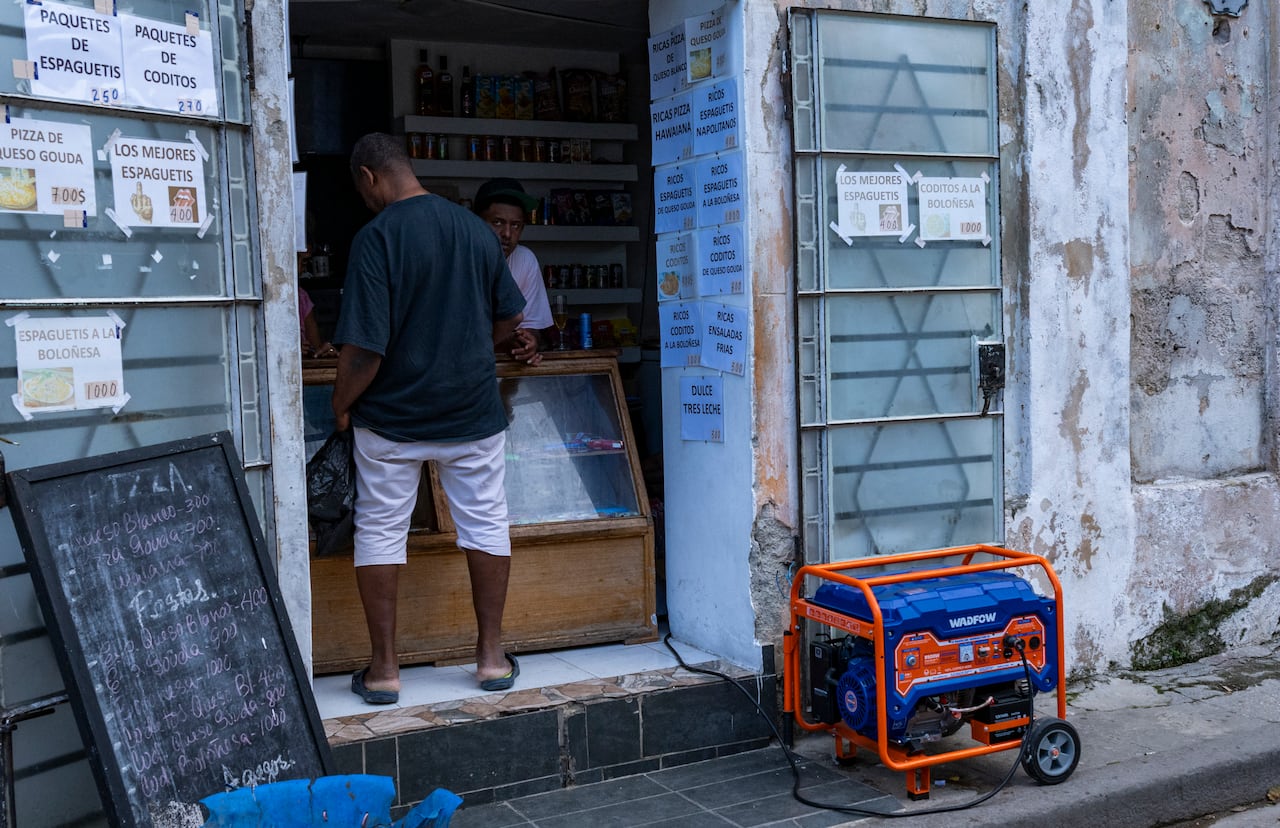
A power generator is seen at work outside a shop in Havana amid Wednesday’s blackout. (Yamil Lage/AFP/Getty Images)
By Wednesday afternoon, government sources reported that teams had managed to restore power to about 2.5 percent of Havana, representing roughly 21,100 customers, emphasizing that recovery efforts were gradual and dependent on the conditions of the system. There were no updated figures provided by late Wednesday night.
Prime Minister Manuel Marrero Cruz expressed confidence in the expertise and dedication of the electrical workers to resolve the situation as quickly as possible on X.
-
Trump floats ‘friendly takeover’ of Cuba. What’s his endgame?
-
Ottawa announces $8M to Cuba amid growing humanitarian crisis
As darkness settled, residents of Havana gathered on their doorsteps, cooking caldosas, a traditional soup shared among neighbors who contribute various ingredients like vegetables, chicken, and meat. A group of musicians entertained along the city’s famous seawall throughout the night.
Others gathered around a rechargeable lightbulb to play dominoes.
“With the power outages, this is the only way for us young people to entertain ourselves,” remarked Jeferson Silvera.
Daily and extended power outages have become so prevalent that 66-year-old Genoveva Torres was waiting for electricity to return as usual in the evening to prepare dinner. She was upset when informed about the widespread blackout.
“My God, how long will this last?” she exclaimed. “Then we won’t be able to eat. We’ll have to resort to bread again.”
State media indicated that the outage was a result of the shutdown of the Antonio Guiteras thermoelectric power plant, located east of Havana, due to a leak in its boiler.
Repair cannot commence until fault is identified
Radio Rebelde reported that the technical director of the plant, Román Pérez Castañeda, stated that teams must first identify the fault, decide on a repair strategy, execute it, and then restart and synchronize the unit.
Pérez Castañeda explained that a pipe burst in the boiler, resulting in a water leak and subsequent fire that was extinguished by firefighters without significant damage, according to Radio Rebelde.

Foreign Affairs Minister Anita Anand and Liberal MP Randeep Sarai, the secretary of state for international development, announced that Canada would deliver $8 million in humanitarian aid to Cuba, where people are facing blackouts and shortages of food, fuel and medicine.
The outage caught 63-year-old Odalis Sánchez out on the streets with her grandson. Recently operated on, she was unable to walk and had to call someone for a ride home.
About 200 individuals were waiting at a bus stop nearby, but due to a fuel shortage, buses were not in operation, prompting them to seek rides through any available means, including hitchhiking.
-
4 killed in shootout involving U.S.-registered boat, Cuban officials say
-
Canada’s major airlines wind down flights to Cuba as Havana airport warns it will run out of jet fuel
“I need to get home to see what I can do,” Sánchez said. “Without power, nothing can be done. My grandson is studying, and I need to prepare food for him. Public transport isn’t functioning.”
This marks the second major outage to hit western Cuba in the last three months. A blackout in early December that affected the western part of the island persisted for nearly 12 hours.
Officials stated that a fault in a transmission line connecting two power plants resulted in an overload, causing the collapse of the energy system in the western sector.
“We must keep fighting”
Authorities have pointed out that certain thermoelectric plants have been in operation for over three decades and receive minimal maintenance due to the high costs. Furthermore, U.S. sanctions have hindered the government from acquiring new equipment and specialized components, according to officials.
Cuba is also facing challenges with depleting oil reserves following the U.S. attack on Venezuela in early January, which halted vital petroleum shipments from that South American country.
Later that month, U.S. President Donald Trump threatened to impose tariffs on any nation that sold or supplied oil to Cuba.
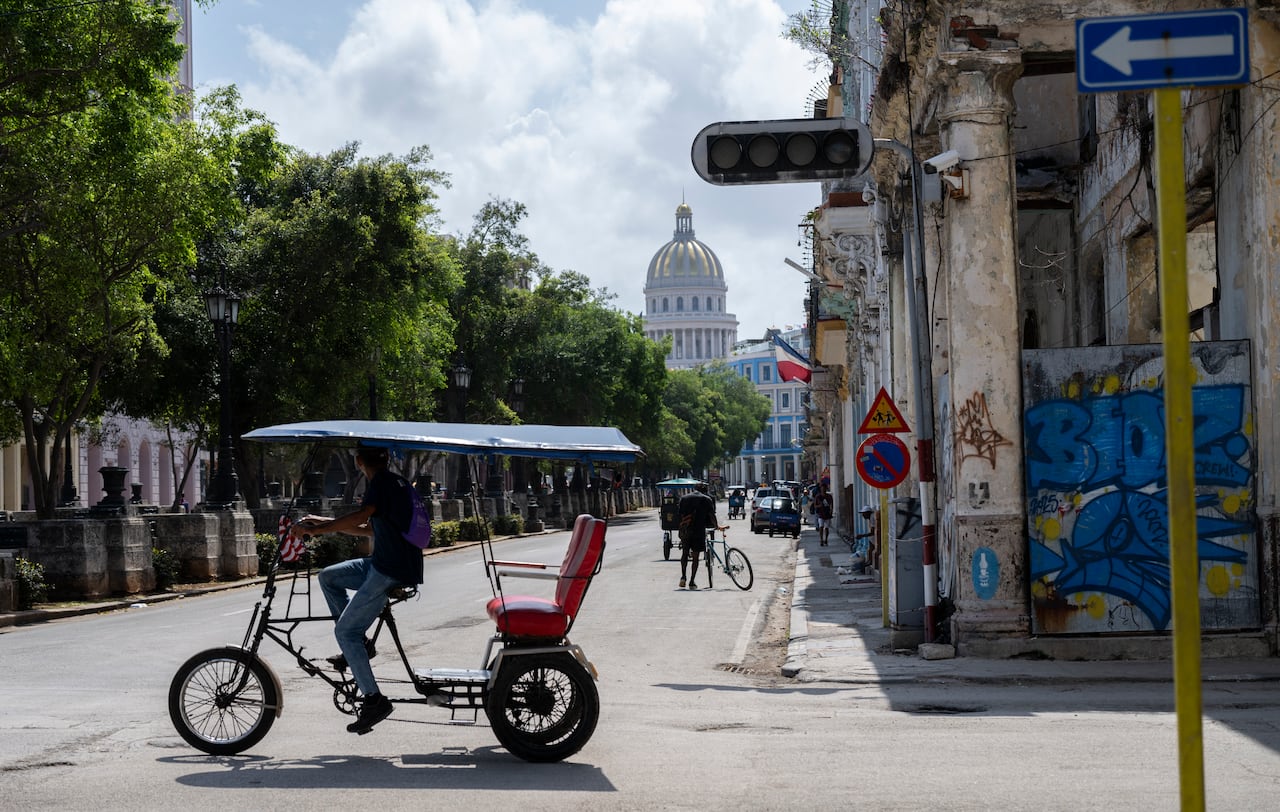
A pedicab moves past a traffic light that is out during a power outage in Havana on Wednesday. It’s the latest outage to affect an island struggling with dwindling oil reserves and a crumbling electric grid. (Yamil Lage/AFP/Getty Images)
Ernesto Couto Martínez, 76, was looking for a ride home and expressed his determination to face the latest outage “with the spirit that all Cubans possess.”
“We must keep fighting. There’s no other option,” he stated. “We need to move forward, regardless of the blockade.”
-
Cuba running on fumes as Canada considers sending relief
-
Tourism was once an ‘economic locomotive’ in Cuba. Now, the train is coming off the tracks
Last month, the Cuban government instituted stringent fuel-saving measures and cautioned that jet fuel would not be accessible at nine airports across the island until mid-March.
Prior to the attack on Venezuela, the island was already contending with an aging electrical grid, generation deficits, and disruptions in fuel supply.