

Two individuals from Ontario are calling on the province to reassess and enhance the system they claim is dysfunctional in controlling air pollution from major industries. Ian Borsuk, who serves as the executive director of Environment Hamilton, and Crystal George, a lawyer and member of Aamjiwnaang First Nation near Sarnia, are preparing to submit a formal review application to the Ontario government on Monday.
This action is being taken in collaboration with the Canadian Environmental Law Association (CELA).
“It has become evident that there is a need for intervention or a challenge to the existing system,” expressed Borsuk to CBC Hamilton. “There is a misconception that Ontario has more robust air quality protections than it actually does.”
Their plea is for the province to revisit its “cumulative effects policy,” which was established in 2018. This policy aims to introduce additional regulations to prevent industries from releasing high levels of carcinogens that pose health risks to humans, as indicated on the province’s website.
Additionally, it aims to tackle the issue of pollutants accumulating in communities over time.
However, a recent report by CELA states that the policy has not succeeded in enhancing air quality in Ontario due to its narrow focus and the government’s failure to implement it effectively in the approval process.
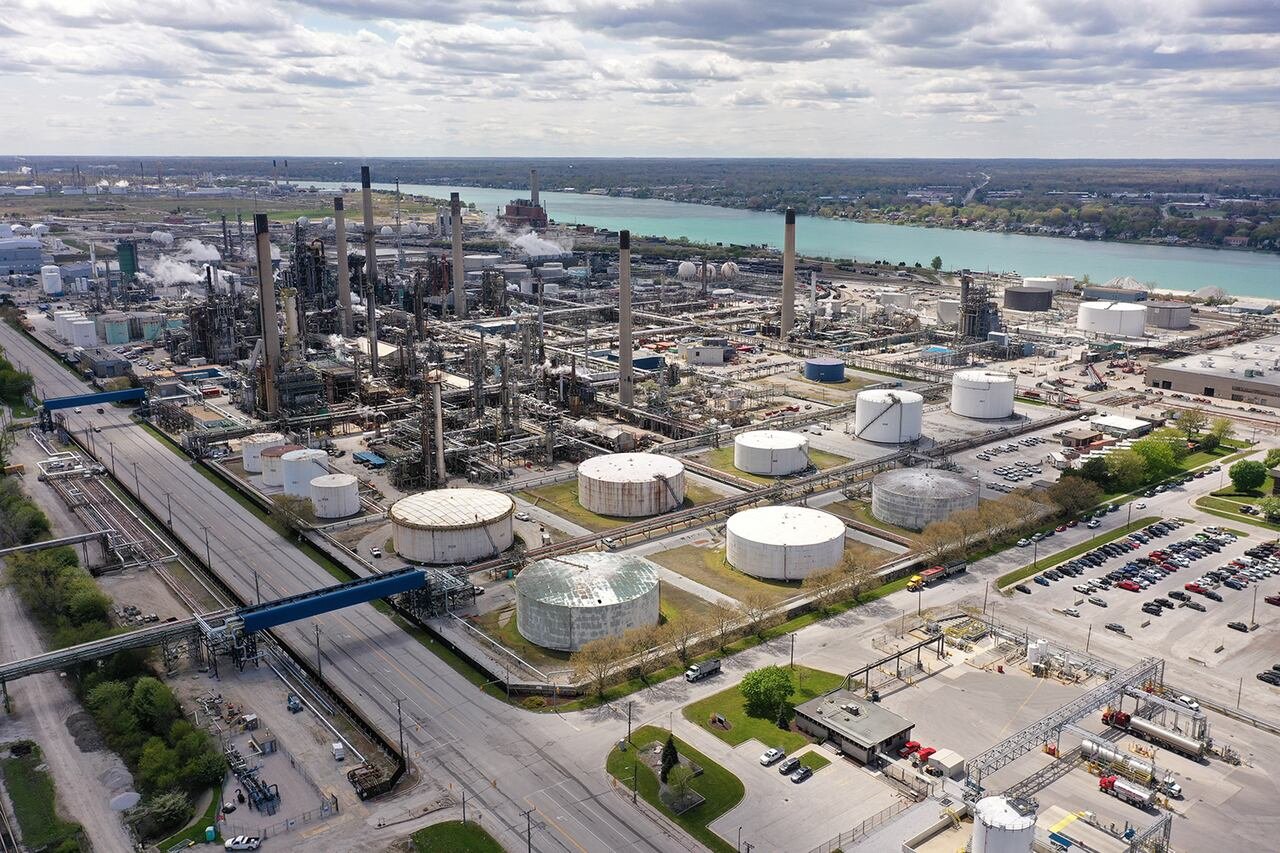
The report highlights that Ontario’s regulatory approach to air pollution is flawed as it focuses on contaminants on a facility-specific basis rather than considering the overall accumulation in communities over time.
The Ministry of Environment, Conservation and Parks (MECP) did not provide responses to inquiries from CBC Hamilton before the article’s publication.
Policy Application Limited to Sarnia and Hamilton Regions
According to the report, only new or expanding industrial facilities in the Sarnia area projecting benzene emissions and in the Hamilton area projecting benzene or benzo[a]pyrene emissions require approval through the cumulative effects assessment.
Benzene and benzo[a]pyrene are cancer-causing substances produced during industrial activities such as steelmaking, petroleum refining, and chemical manufacturing.
Nonetheless, the report points out that numerous other affected communities, harmful substances, and established emitters are not covered by the policy.
-
Ontario rejects Hamilton residents’ plea to investigate ArcelorMittal Dofasco emissions
- <a class="cardWrapper-u5T0r cardWrapper-_487P noPaddingCardWrapper" data-feature-instance="similar-link" data-feature-name="link" data-contentid="1.6904964" aria-hidden="false" data-cy="type