

On Friday, Alberta Premier Danielle Smith expressed a heightened sense of optimism regarding the potential for a new pipeline following her earlier meeting with Prime Minister Mark Carney in Ottawa.
“This morning I referred to ‘if’ a deal were to be signed, but afterwards I said ‘when’ a deal is signed. This shift reflects my increased confidence after discussing some of the disagreements we identified,” Smith shared with reporters shortly after her conversation with the prime minister.
Smith noted that this advancement comes at a pivotal moment as activists in Alberta advocate for a referendum on separation, potentially showcasing to Albertans that “Canada can work.”
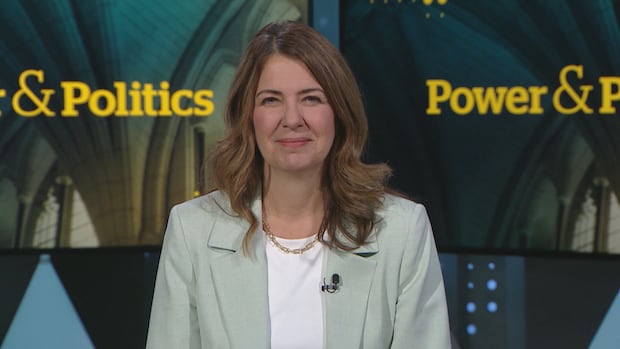
Amid an Alberta voter list data breach, a potential separatist referendum and pressure to finalize a pipeline deal with the federal government, Alberta Premier Danielle Smith has a lot to manage. Power & Politics hears from the premier, who says Ottawa and Alberta are moving fast to finalize a deal.
Earlier this week, the organizers of a petition seeking a referendum reported that they submitted over 300,000 signatures to Elections Alberta. However, a court order is currently halting the verification of these signatures as a judge reviews a legal challenge from a group of Alberta First Nations, claiming that the petition process infringes on treaty rights.
A ruling on this matter is anticipated soon.
Meanwhile, Alberta and Ottawa are engaged in discussions regarding an energy and environmental agreement aimed at resolving long-standing disputes about oil and gas production and climate regulations.
Before their meeting, both Smith and Carney indicated that advancements had been made on the agreement, which stipulates several conditions that must be satisfied before a new bitumen pipeline can receive approval, including carbon capture and storage requirements.
“I understand that the industry is becoming somewhat impatient, and Albertans are feeling the same. If we are to proceed with that MOU, I hope it materializes in the coming days, as I believe it is essential for Alberta to demonstrate that Canada can function effectively,” Smith stated before her private discussion with Carney.
Neither leader explicitly addressed the separatist movement in Alberta or mentioned pipelines during their public remarks, although Smith has maintained that the construction of a new pipeline is necessary.
-
Carney government planning changes to speed approvals for pipelines, resource projects
-
Will the MOU result in a pipeline from Alberta? Most polled don’t think so
-
Alberta’s Smith says 2 early deadlines for energy MOU with Carney will be missed
Last week, Carney informed The Canadian Press that the likelihood of a new pipeline is now “more probable than possible,” partly due to the disruption in global energy markets caused by the war in Iran.
“We are striving to enhance the functioning of Canada for Albertans and all Canadians. When Canada operates effectively, it benefits the entire world,” Carney remarked on Friday.
Smith added that once a deal is finalized, she will be able to disclose more about the remaining gaps between the two governments in their negotiations. One of the unresolved matters is the timeline for a $130 per tonne industrial carbon price.
“This has always been central to our discussions, and I believe we reached a mutual understanding today on several outstanding issues. I hope to have a more definitive announcement very soon,” Smith concluded.
The initial deadline for fulfilling the requirements outlined in the memorandum of understanding was April 1, which has now been extended to July 1.
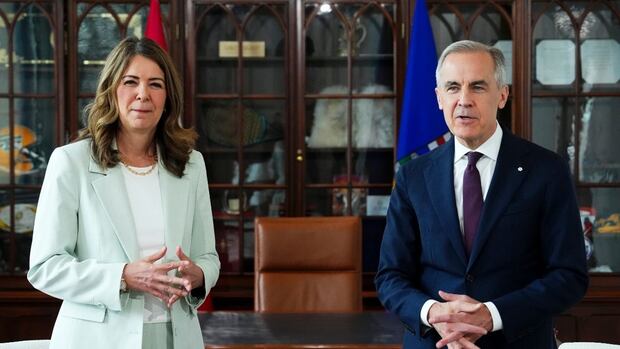
Alberta Premier Danielle Smith is in Ottawa to discuss oil pipelines and other energy projects with Prime Minister Mark Carney with the aim of finalizing the memorandum of understanding between the two governments signed in November.
For any pipeline heading to the West Coast, it must traverse British Columbia, where Premier David Eby is seeking Ottawa’s backing for liquefied natural gas initiatives that he claims already have private sector support.
“I recognize that the pipeline initiative is critically important to Premier Smith, yet there remains no defined route, no proponent, and no advancement since its initial announcement around two years ago,” Eby stated during a press conference in Langley, B.C.
“I am optimistic that the prime minister and I can find a pathway to ensure that British Columbia’s projects receive equal attention from Ottawa.”
Shortly after the meeting between Smith and Carney, the federal government released two discussion papers to gather input on a plan that would shift the authority to evaluate proposals for new interprovincial pipelines and transmission lines to the Canada Energy Regulator, as opposed to the Impact Assessment Agency.
This development was met with cautious optimism by some within the oil and gas industry, while it sparked anger and concern among environmental organizations.
Smith mentioned that her administration is exploring five potential pipeline routes for submission to the Major Projects Office and that leading oil companies have been providing advisory support throughout the process.
“We anticipate that once it is submitted and there is a positive indication for moving forward, we will have substantial support from private sector proponents,” she remarked.